
In Conversation with Alan Dove
The voice behind the vision.
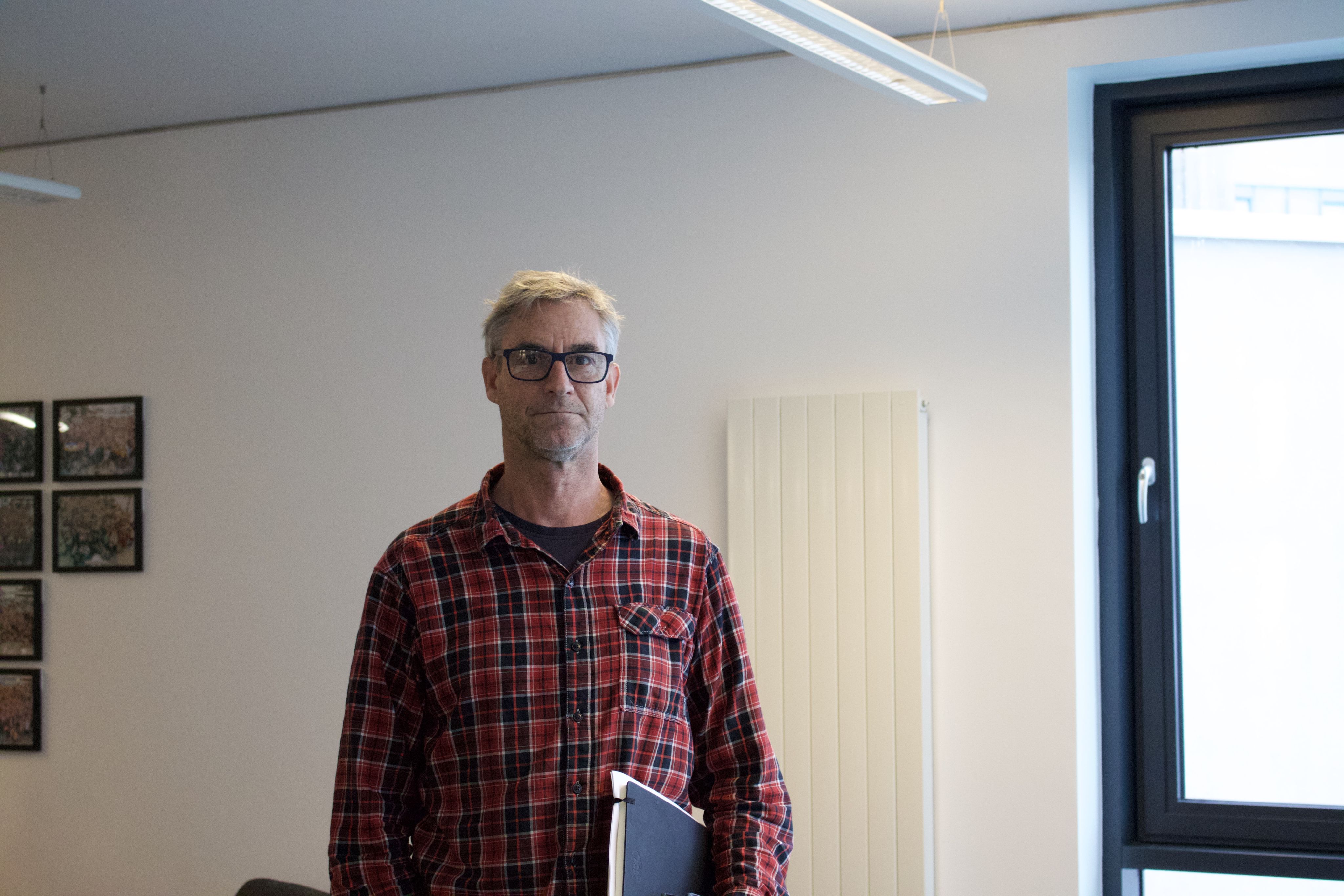

LET’S introduce Alan Dove, the director of commercial services for the Student Union at Bournemouth University for the last fifteen years. With decades of first-hand music experience, Alan can give us stories of the past, the troubles of the present, and what might be coming in the future for the Bournemouth music scene.
Since 1993, Alan has been part of Bournemouth University. A Middlesborough boy, Alan completed a degree at Bath University, spending time in London, before making Bournemouth his home. Alan had his first music moment in Brighton, watching a hot new rock band called Blue Aeroplanes. ‘I can remember everything about the gig like it was yesterday, and that gig was thirty-five years ago,’ said Alan, ‘I can almost remember what the place smelled like, what the beer tasted like,’ he added.
This moment pushed Alan into a world of live music, festivals and venues; a world he has not left since. ‘Music, travel, and relationships are the most important things that keep me alive,’ said Alan. Music continues to shape who he is with some old Johnny Cash tunes still bringing him to tears. Music does not care who you are, the focus is only on the person who is creating something in front of you. Alan proudly states he is a gig person, always wanting to lock into the moment, ‘it provides release and a reminder that with everything that’s going on in the world around you, there’s still moments of pure beauty in music,’ he said. ‘I am absolutely convinced that there is a musical moment for everybody on the planet somewhere.’ Have you had yours? Or is it waiting just around the corner?
'Live music venues are all unique. You can't see into them but they are the most amazing spaces when they come to life.'
In the 90s, Bournemouth was poorly regarded as a town for artists. Back then, cities were A list, B list and C list, and every artist wanted to play in the A list cities. Compared to A list cities Bristol, London and Manchester, Bournemouth was way down the line as a C list town.
‘Bournemouth is a very young town. It’s about a hundred years old: that’s very young in the UK,’ said Alan, compared to Poole and Christchurch, which are both 2,000 years old. Bournemouth appeared in the Victorian era with no music culture to go back on. As a result, the town was born of club culture, booming at the start of this new movement. Developing a live music culture in Bournemouth was going to take work, as it was not there inherently.
‘Bournemouth was born of discos and DJs That’s its heart, and you can see that it’s quite a clubby town,’ said Alan. The lack of live music culture became a mission for Alan to overcome, and he started with the creation of The Old Fire Station.
The Old Fire Station was built in 1903 and remains as one of the oldest buildings in Bournemouth. When Alan moved to Bournemouth, the venue as it is today did not exist. It came along later when Bournemouth University brought the admin block downtown and was given The Old Fire Station as part of the property deal.
‘I was part of the team who built The Old Fire Station and designed it. We decided we wanted a multi-purpose venue where we could do live music, comedy and club nights,’ said Alan.
The venue opened for gigs in 1994 with the first gig ever being a band called Dubstar. That same night, the biggest band in the world at the time, Blur were playing at the Bournemouth International Centre, and they came down to The Old Fire Station, quite possibly marking the continued popularity and success of the Bournemouth venue for the future. Then of course, in 2019 the covid pandemic hit and live music venues across the UK closed.
‘We joined an organisation called the Music Venues Trust Charity that represents small live venues in the UK. They started the rescue plan,’ said Alan. After the Government announced available funds to save music venues, an agent from London wrote to say that The Old Fire Station deserved a bail out because of one thing it did throughout the 90s and 2000s.
‘He said: when I was trying to book UK hip-hop artists into venues outside of London, the venue that always took the booking was The Old Fire Station. They were championing Black UK music before any other venue on the South Coast,’ said Alan. In simple words, Bournemouth and The Old Fire Station were culturally significant in the development of Black hip-hop in the UK, and the students here undoubtedly helped to create the UK hip hop scene by accident. ‘That became an important moment for us and an important moment in our outlook on how we see live music,’ said Alan. ‘It’s really important to get students in front of live music because sometimes you’re going to create a movement.’
The live music culture in Bournemouth continues to develop as the venues constantly change. ‘You need a hierarchy of venues inside a town, that’s how it works. You need small venues, midsize venues, and big venues,’ said Alan. For Bournemouth, Bear Cave and Anvil are small venues; The Old Fire Station is midsize, and the 02 Academy and Bournemouth International Centre are big venues. ‘If you’ve got that hierarchy working in a town, you’ll have a scene start to develop. What you hope is that the local band scene feeds into that.’
As bands play and links are made, audiences come together to support live music. But as the venues have changed, so have the audiences. Bear Cave remains one of the most popular venues, with around six gigs a week and a strong following. Scenes including heavy metal and hip-hop are popular, but grime has faded over the years with Bournemouth heading the scene ten years ago.
‘I don’t think Bournemouth has much of its own music scene; it has a gentle little indie scene,’ said Alan. ‘Live music venues are all unique. You can’t see into them, but they are the most amazing spaces when they come to life.’ These venues carry a mix of audience members, always focusing on the moment that the band is trying to create, so different from the club world. ‘The people who are doing it are almost overwhelmingly good people who aren’t in it for them, but in it for the bands and the music and that’s really refreshing,’ said Alan.
As the digitisation of music has grown rapidly, the number of young audiences coming to live music venues has dropped. ‘It is nationally recognised amongst everybody that this is a problem, from the record company to the artist to the venue,’ said Alan, ‘there’s not enough kids kicking off down the front of the stage,’ he added. In the 1980s, TV was the dominant media, but due to streaming and the complexity of consumption, music is now a completely different world to navigate. How pop stars are formed has become more about their whole being, with the theatrics of the show becoming more central than the music itself. In today’s world, the tags of music have disappeared, and people travel across all genres of music.
‘That’s quite exciting but it’s really difficult to engage with,’ said Alan, as his makes it harder to cut through for artists. In this 21st century, we are in an attention economy: everybody wants your attention. Young people constantly want your attention. ‘You need to find time to switch that attention grabbing off and go throw yourself into something you can just indulge in, and music is really good at that,’ said Alan. ‘I’m worried that the digital attention economy is eroding the connection to music,’ he added.
Perhaps we all know if we turned off our phones and absorbed ourselves in the music, we would have a much more exciting time. But maybe young people are realising staying at home is doing them harm, and we are opening our eyes to the corrosiveness of social media. Everything around us is controlled but expression cannot be. ‘Music has got to be one of the ways that breaks through and breaks out.’
All music, especially live music, drops you back into the moment briefly, and that is something that is hugely missing from a young modern society. Young audiences find it hard to live in the moment when the world of social media is at their fingertips. ‘I put my house on live music venues being the safest and most exciting. We need to get people back into these spaces, out of all the late-night spaces.’ said Alan. When you are so attached to your phone, it can be difficult to find the real world. But it is waiting for you. And Bournemouth could be the perfect place to find it again.
‘Take a leap of faith and dive in.’

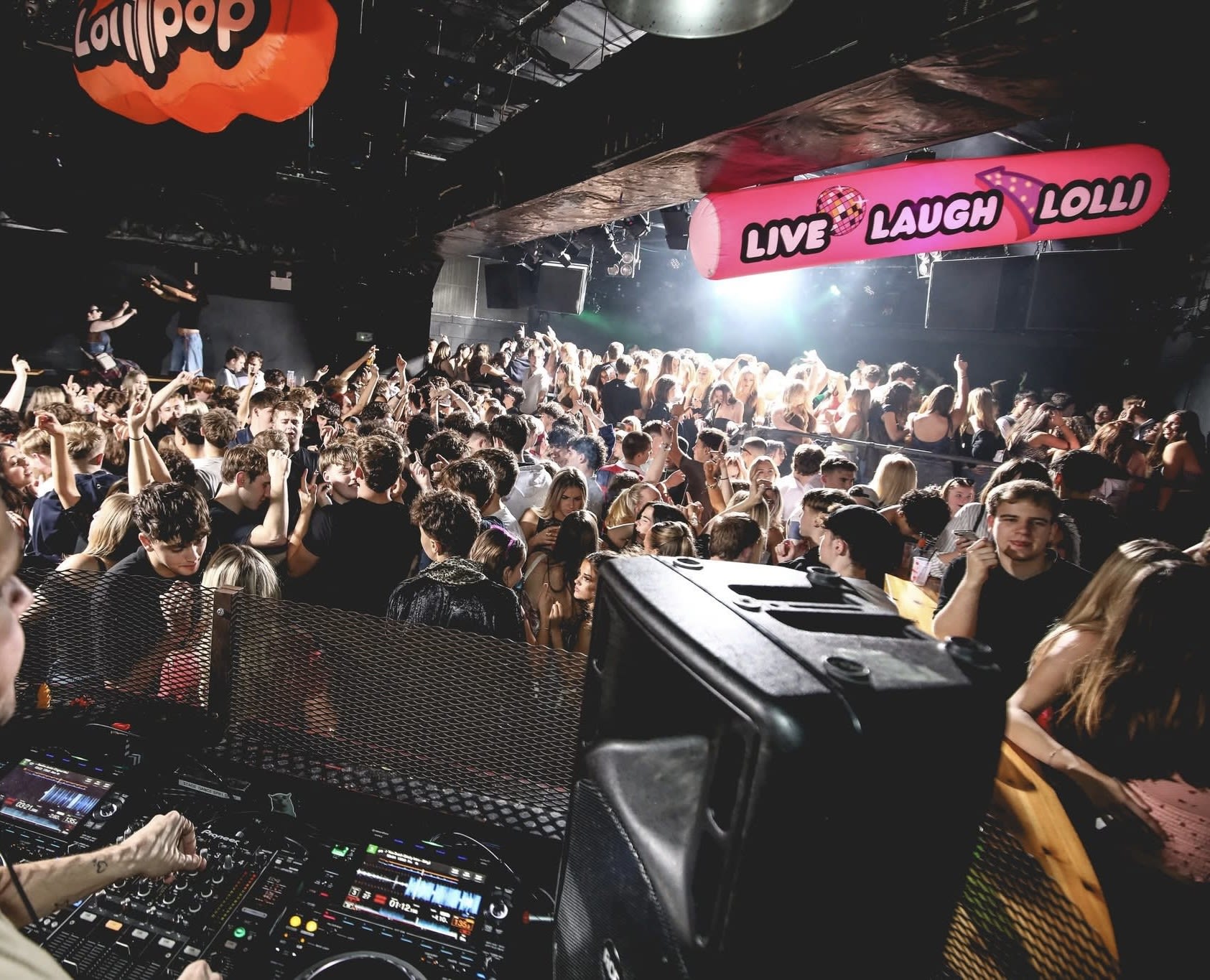
Lollipop in The Old Fire Station, SUBU, from Facebook
Lollipop in The Old Fire Station, SUBU, from Facebook
 Built with Shorthand