
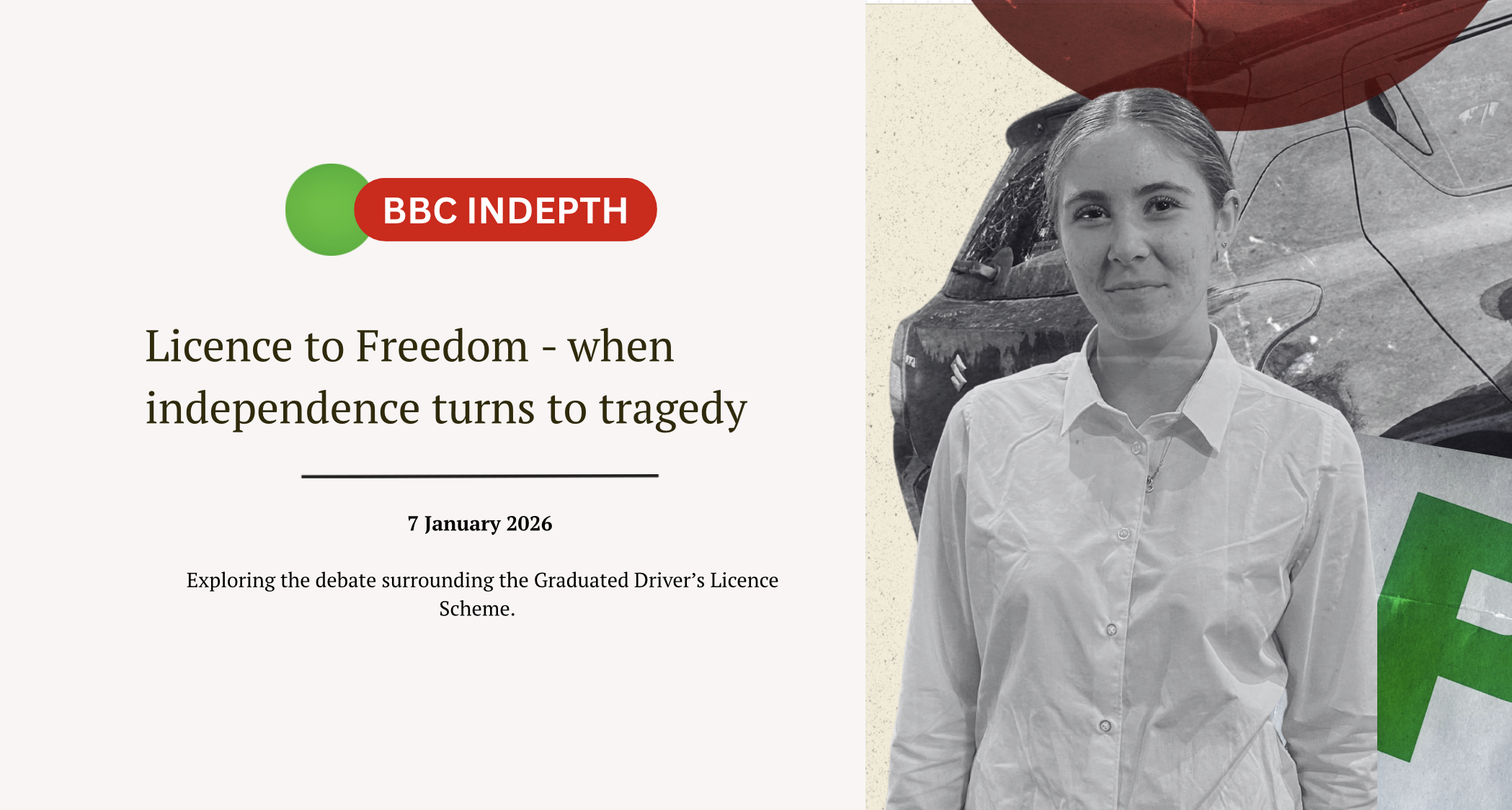

Adjusting the buttons on her daughter’s blouse, Sharron Huddleston said goodbye for the very last time without realising it.
On a cold autumnal evening, Caitlin was getting ready for a meal whilst waiting for a lift from a friend who had only been driving for four months.
Just 15 minutes after leaving the family home, Caitlin was dead. The driver lost control while entering a bend on a rural road. The car carrying three teens spun onto the opposite carriageway, colliding with a van that struck the passenger seat Caitlin was sitting in. The driver also died.
“Finding out that evening, all that time, Caitlin had been sitting dead in a car and being told about it was just utter shock and devastation that you just can’t put into words,” Sharron recalls. “I didn’t know where to turn. I had lost my precious baby girl, and the grief was just so painful.”
Engulfed in grief, Sharron was handed a red booklet with “Brake” written across the front. Flicking through the pages, she stumbled across the Graduated Driver’s Licence scheme – a phased system in which drivers would have to build up experience on the road before having the same privileges as other drivers. One element of the proposed GDL scheme would limit novice drivers from picking up peer-aged passengers.


Sharron Huddleston creator of Caitlin's campaign to reduce road deaths for young people - screenshot from a Zoom call by Charlotte Spicer
Sharron Huddleston creator of Caitlin's campaign to reduce road deaths for young people - screenshot from a Zoom call by Charlotte Spicer
“My focus in my life now is to campaign for the Graduated Drivers Licence scheme. It has saved me. I am still doing something for Caitlin because I know that she would be alive and lots of other teenagers would still be alive if we had this law in the UK.”
Progressive licensing has been debated in Parliament for decades, but the UK Government has never sided with the scheme. A green paper was announced back in 2014 to discuss the GDL being rolled out in the UK, but it was never released. Sharron revealed that she feels “hurt that the government don’t seem to take the scheme seriously enough.”
Last year, the scheme was brought into discussion by Labour MP Kim Leadbeater, which was subsequently dropped.
"I remain convinced that Graduated Driving Licences save lives,” Kim said.
In a statement, the Parliamentary Under-Secretary of State in the Department for Transport, Lilian Greenwood felt it unfairly punished young drivers and insisted that the UK Government are “looking into ways to reduce the number of deaths and injuries on the road.”
Source : Department for Transport
“I felt completely frightened when the van driver drove into the side of my car,” Grace Taylor recalls.


Grace Taylor - a 17-year-old waitress from Essex. Photo - Charlotte Spicer
Grace Taylor - a 17-year-old waitress from Essex. Photo - Charlotte Spicer
Just weeks after passing her test, 17-year-old Grace found herself involved in a collision.
For many teenagers, passing the UK driving test marks the first step towards adulthood and independence. For Grace, she finally doesn’t have to rely on dad’s taxi service anymore – the freedom to travel where she pleases, quite literally in the palm of her hand.
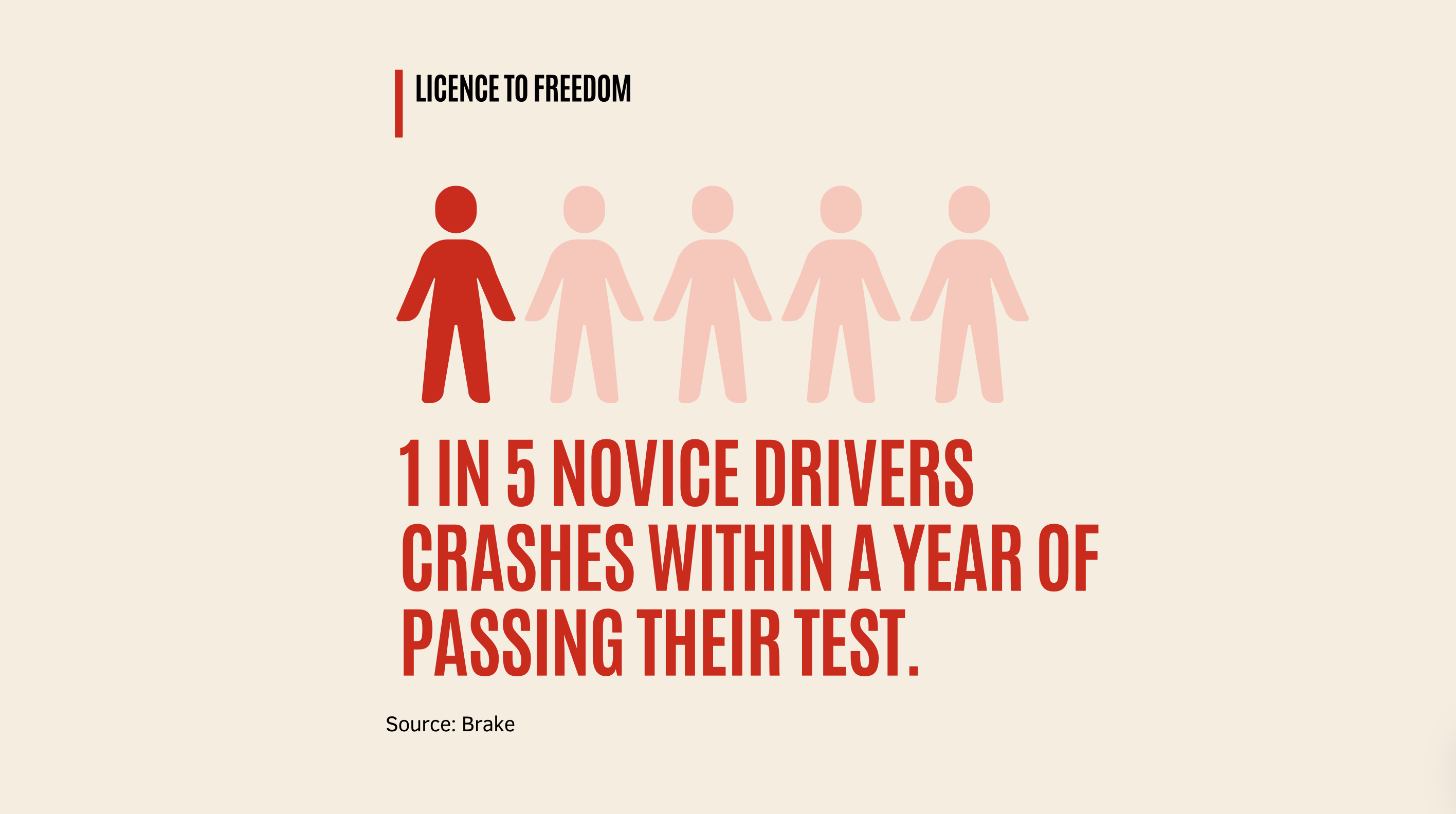
When leaving a roundabout, Grace’s car jolted back as a driver struck the side of her. Despite Grace not being at fault, figures show that one in five new young drivers crashes in their first year of driving.
In this case, Grace drove away shaken up with a damaged car, but for many parents, their children go out and never return home again.
Why are young drivers at risk?
Every year, over 1,500 young drivers are killed or seriously injured on UK roads. The key risks for young people can be broken down into peer pressure, behaviour, environmental factors and psychological factors.
The UK Government recorded that in 2024, 4,740 people were killed or seriously injured in crashes that involved at least one young driver. With 1,003 being passengers of young drivers, 1,376 young drivers and themselves and a total of 2,360 other road users – pedestrians, cyclists and other motorists.
Young drivers are the least likely to wear a seat belt out of all age groups. Data : Department for Transport
Music from: Pixabay. Sound effect : Charlotte Spicer
What is the GDL scheme?
The proposed gradual licence rollout suggests that for six months, young new drivers shouldn’t carry passengers of the same age group, a restriction on nighttime driving, the mandatory displaying of P plates, a limit on engine size, a reduction or ban on alcohol intake, as well as a minimum learning period.
Abroad, the scheme has been adopted by countries such as Australia, New Zealand, Canada and the US. Countries that have implemented the crash have seen young driver fatalities drop 20-40%.
Young driver road injuries have fallen by 23% in New Zealand under GDL rules.
Despite mounting pressure from experts and campaigners, the UK currently isn’t looking into implementing the scheme.
Source: Protect Young Drivers



The debate
Lauren Kemp, 21, a learner driver, is looking forward to a future where she can drive without assistance.
Currently, the only difference from a regular licence is that if caught using a mobile phone whilst at the wheel, a novice driver can lose their licence. Otherwise, there are no conditions for new drivers.
“I would be devastated if I couldn’t drive with my friends. The whole point in passing your test as a young person is picking up your friends and going out with them,” she says.
Having failed her first attempt, Lauren is now building up her confidence to use the roads. She feels that her freedom would be “significantly disrupted” if phased licensing were introduced when she passes her test.
Many young drivers like Lauren feel that the scheme could be seen as a “punishment."

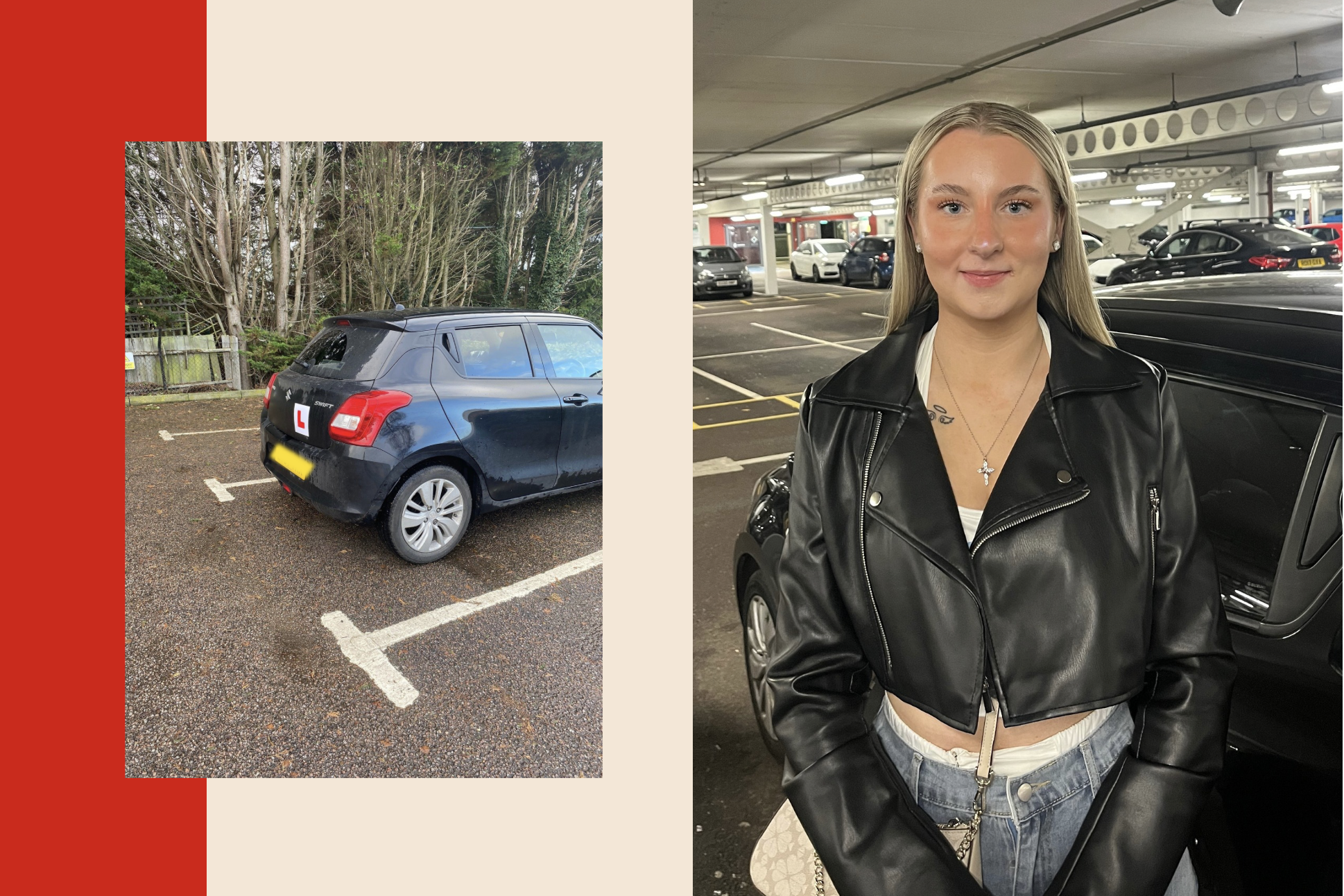
Lauren Kemp - a learner driver from Essex. Photos - Charlotte Spicer
Lauren Kemp - a learner driver from Essex. Photos - Charlotte Spicer
Supporters of the scheme acknowledge the difficulties facing young drivers and the misconceptions surrounding the policy.
Safer Roads Essex Partnership manager, William Cubbin, understands the frustration felt, “Young people work hard to get their driving licence and having independence is hugely important at that age,” he says.
Acknowledging that young people may feel targeted as a result: “It's certainly not a way to punish drivers, it aims to protect independence so young people can continue to drive even after minor collisions where nobody’s hurt,”


William Cubbin is the manager of Safer Essex Roads Partnership. Screenshot from a Zoom call by Charlotte Spicer
William Cubbin is the manager of Safer Essex Roads Partnership. Screenshot from a Zoom call by Charlotte Spicer
“The difficulty arises when young people are with their friends. They aren’t spending all their time thinking about road safety. Inexperience is also a huge factor, possibly the biggest. Allowing for a minimum learning period where they have more time to drive before independently facing all the risks on the road would improve safety,” says William
A study conducted by the AA Foundation found that the probability of a young driver being involved in a fatal collision increased by 44% when carrying a passenger of the same age demographic. It doubles when carrying two passengers.
When an older passenger is present in the car, the likelihood of a road traffic collision significantly decreases, a finding that supporters feel is beneficial to protecting young drivers.
For campaigners, the challenge is to continue to improve road safety without stripping young people of their independence.
Source: Department for Transport
A huge voice in the campaign work is Crystal Owens, who tragically lost her son, Harvey, in a car crash in North Wales in 2023.
After launching a petition to introduce safer driving licensing for young drivers, Crystal says:
“The choice needs to be taken away from them because it's a matter of life and death.”
Harvey died alongside three teenage friends on a camping trip – Crystal feels that those against the scheme are “misleading” the law is “to protect young people,” she says.


Crystal Owens - set up Forget Me Not Families Uniting for bereaved families. Screenshot from a Zoom call by Charlotte Spicer
Crystal Owens - set up Forget Me Not Families Uniting for bereaved families. Screenshot from a Zoom call by Charlotte Spicer
Inside the teenage brain – “The appetite for risk”
Young people may struggle to assess the dangers on the road due to a delay in brain development. The pre-frontal cortex doesn’t fully develop until the mid-twenties, making teenagers more prone to partake in dangerous behaviour whilst driving.
Responsible for decision making, impulse control and memory could correlate as to why young drivers have the highest involvement in car accidents than any other age group.
Data from the Department for Transport.
Professor Clea Warburton, of Cognitive Neuroscience at Bristol University, says the “rewiring of the brain” occurs in adolescents, which is often why a switch can be seen in their behaviour.
“Risk-taking behaviour could be linked to adolescents becoming more likely to listen to their peers than adults. They don't want to become ostracised from their friends. As a result, teenagers could engage in risk-seeking to be more socially part of an in-group.” Says neurologist Prof Clea Warburton.
The PFC doesn't fully develop until around the age of 25. Clea feels it could be a balance of passengers as well as the cognitive process.

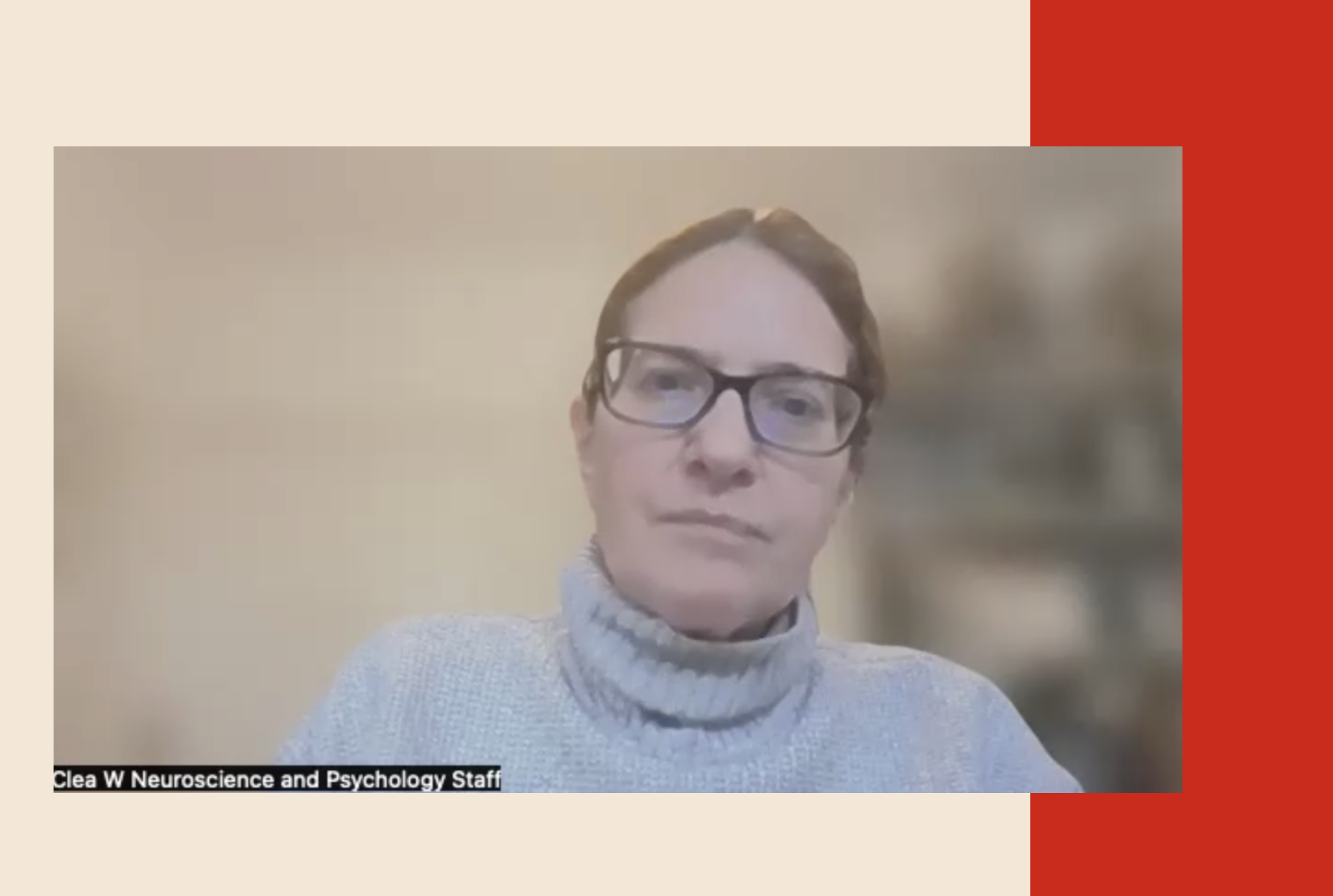
Professor Clea Warburton from Bristol University is the head of school for Physiology, Pharmacology & Neuroscience. Screenshot from a Zoom call by Charlotte Spicer
Professor Clea Warburton from Bristol University is the head of school for Physiology, Pharmacology & Neuroscience. Screenshot from a Zoom call by Charlotte Spicer
“The brain has a limited capacity; there are more distractions in the car, making young people more likely to have an accident that can result in quite significant issues. Teenagers are more susceptible to being egged on to taking risky behaviour by other teens.”
Neurologists such as Clea feel that risk-seeking and decision-making can be influenced by the behaviour of those around them.
Drivers under 25 account for a quarter of road deaths – speeding, peer pressure and mobile phones are among the key factors.
Karl Francis, a driving instructor from Bournemouth on young drivers using mobile phones behind the wheel and the dangers that come alongside this.
Due to a lack of experience, campaigners feel that young drivers should build up experience before carrying passengers. Sharron revealed that:
“People presume that when teenagers are in crashes, they must have been doing something wrong, and that’s not necessarily the case. The crash that my daughter and her friend were in was due to inexperience.
Young male drivers are four times more likely to be seriously injured on the road compared to older drivers.
They account for 80% of young driver fatalities. This has been linked to studies suggesting males have a higher tendency to display aggressive and thrill-seeking behaviour.
“Boy racers”, is it just a stereotype?
“I have never experienced peer pressure from my friends,” Albert Pledger, a 17-year-old driver from Essex, revealed.
In just four months, Albert passed his test and has felt “confident” despite the statistics surrounding male drivers.
When asked about speeding and peer influence, Albert revealed he is the designated driver of his friendship group: “Usually, I am the one who drives my friends around. I have never been expected by someone to race or drive aggressively.”
The “boy-racer” stereotype suggests that young males are more likely to break speed limits, which can be linked back to the delay in cognitive development, on top of the lack of understanding of hazards related to speeding.
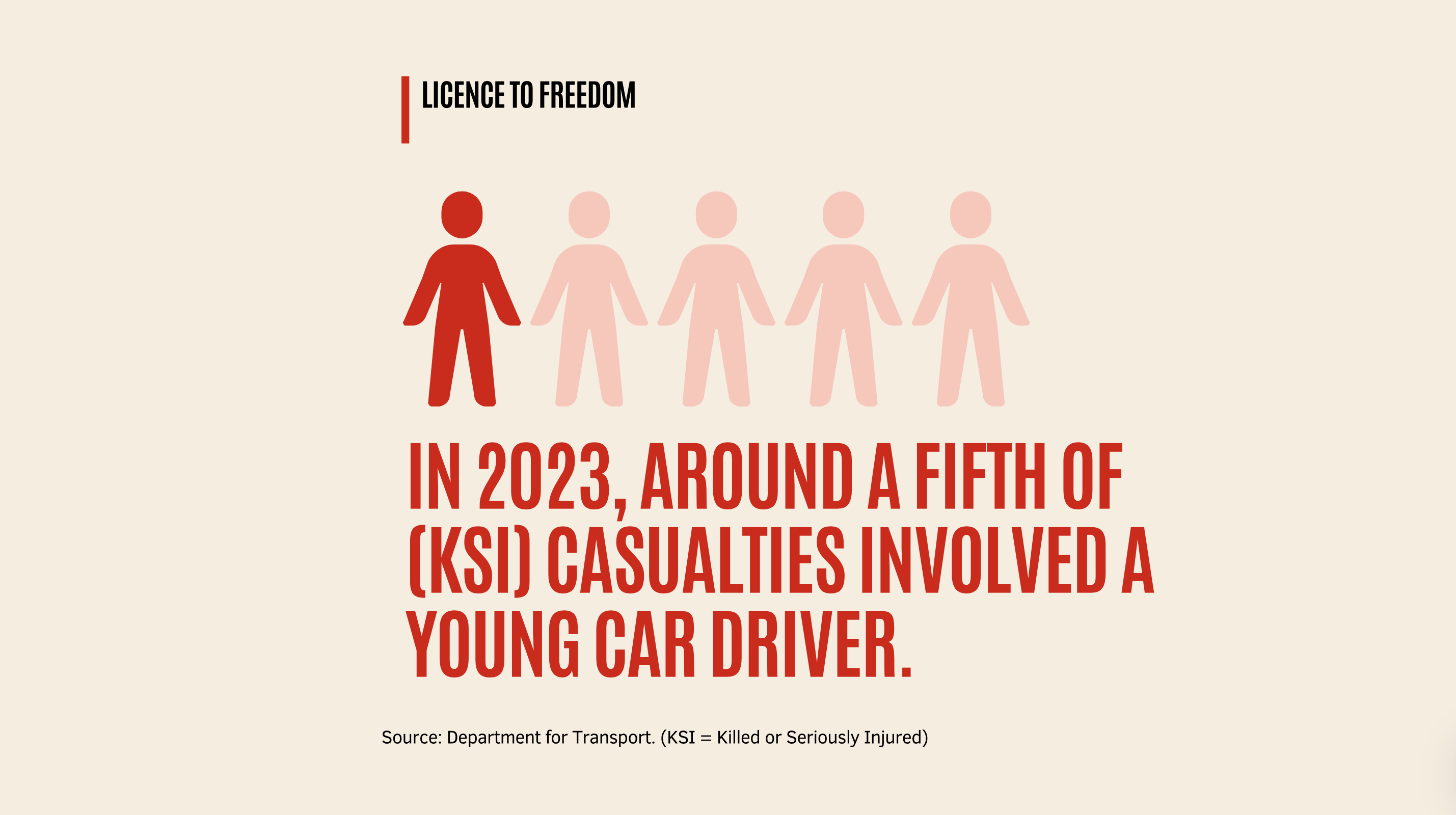
Data from the Department of Transport. The percentage of KSI (Killed or seriously injured) casualties from collisions involving at least one younger car driver. Based on sex and age in Great Britain: 2019 to 2023.
On UK roads, 34% of drivers admit to occasionally or frequently exceeding the speed limit.
Albert feels that speeding is displayed by all drivers, not just young people.
“It can be done by accident, if you zone out a little bit or become distracted.” Albert says.
Road safety expert William Cubbin argues that there is “an internal motivation for young people to impress their friends,”
William understands that it’s not “every single young male, but young males generally find psychological reward in speeding,” he added.


Photo - Charlotte Spicer
Photo - Charlotte Spicer
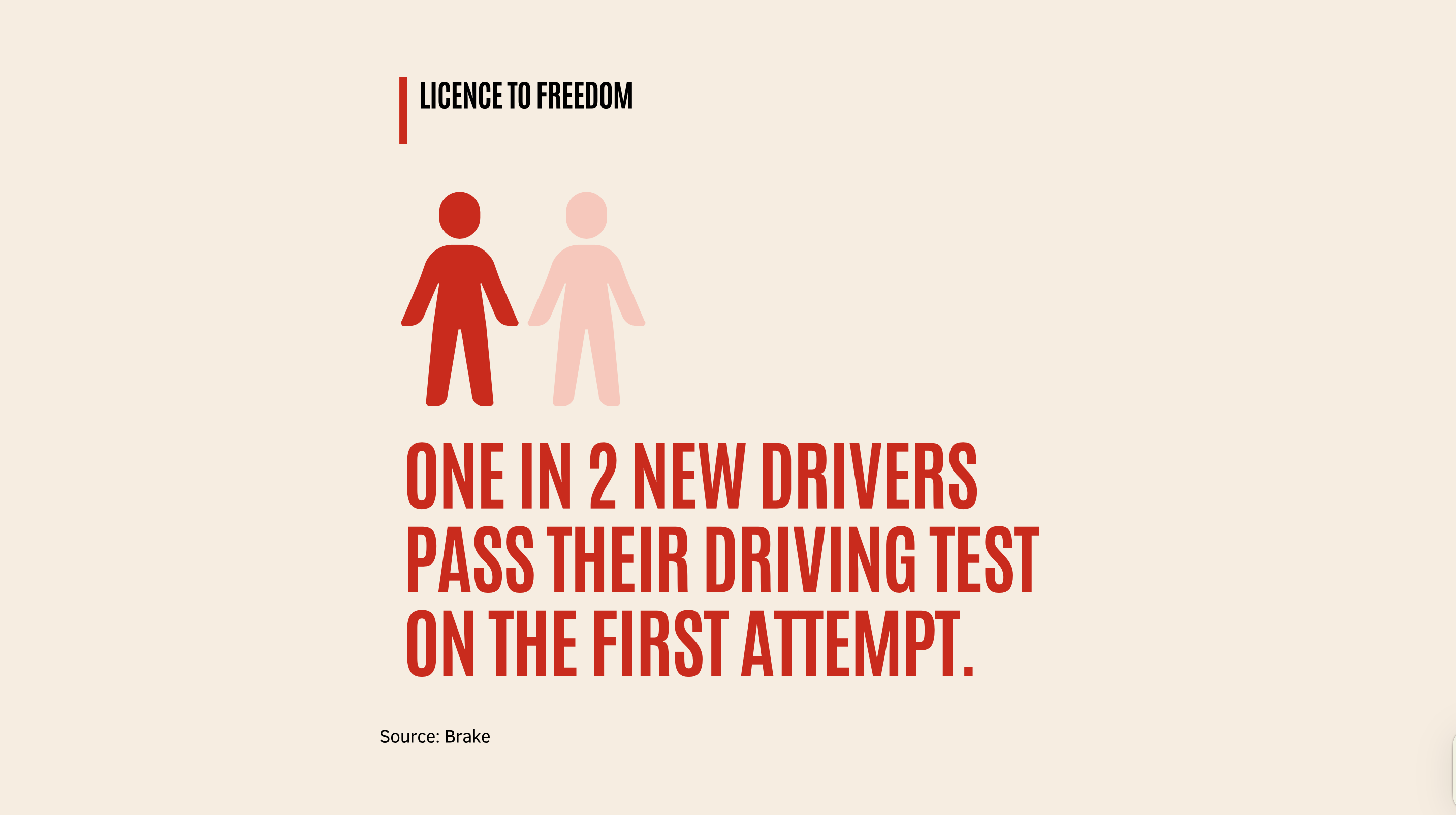
One in two drivers passes on their first attempt. Albert passed first time allowing him to drive to sixth form and work - the independence that many teenagers crave.
Male drivers aged 17-20 are seven times more likely to be involved in a collision than all male drivers - this then skyrockets to 17 times higher between the hours of 2 am and 5 am.
A GDL would restrict Albert from driving at night for a set period. “I quite like driving late at night.” he adds.
“The curfew wouldn’t work for me. I finish work at 10:30 pm during the week; if it were during that time, I wouldn’t be able to work.” Albert added.
But campaigners like Sharron feel that there aren’t enough safety regulations for young drivers like Albert. “The government are letting the young generation down. Our driving licence system is outdated compared to other countries,” Sharron says.
Whilst Albert wouldn’t mind not giving lifts to his friends, he believes the mandatory displaying of P plates is “restrictive” and feels that “drivers would still take advantage” of novice drivers.
Marmalade, an insurance company, found that only 30% of newly qualified drivers use P plates after passing the test – half of those who used the plates experienced abuse as a result.

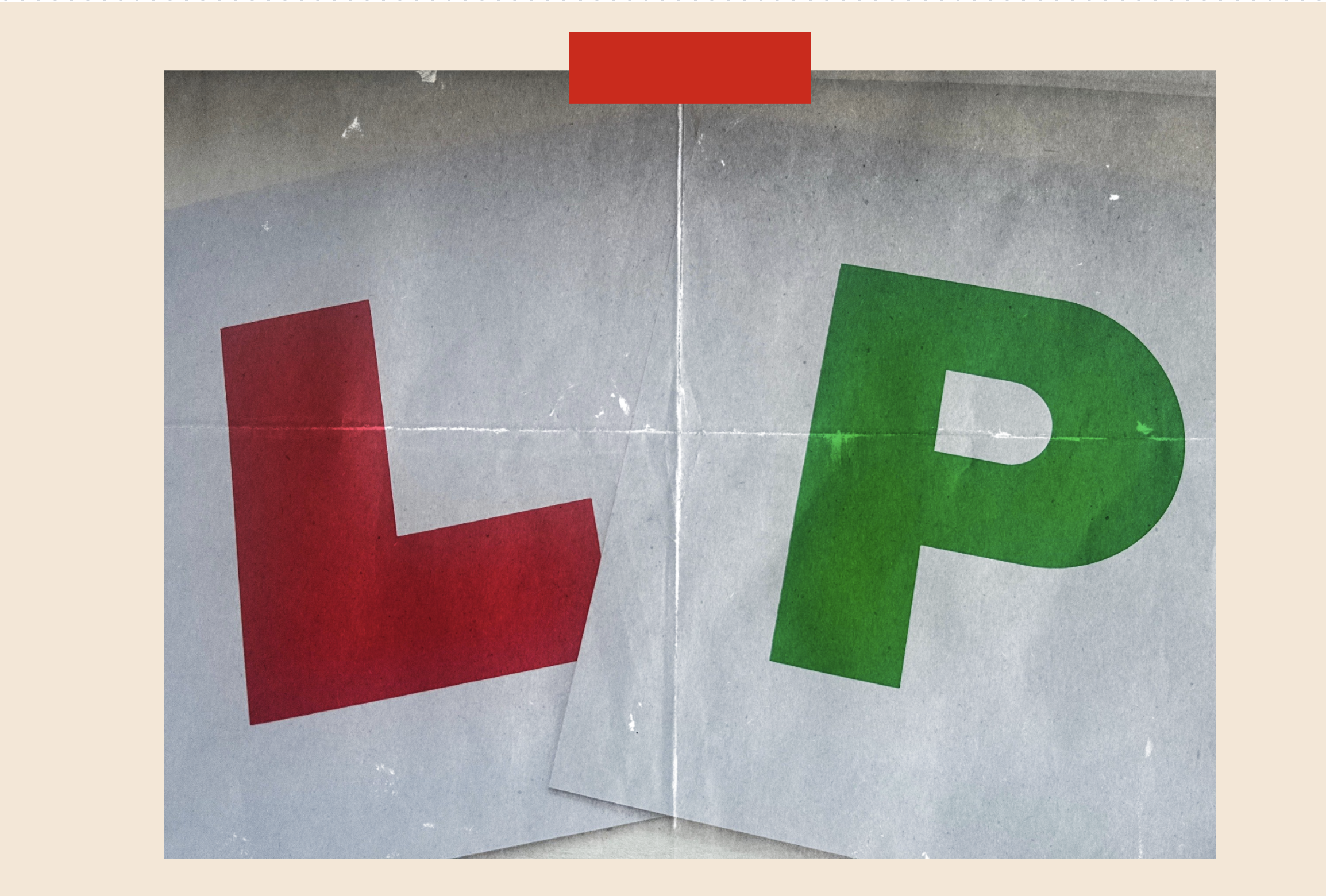
Photo - Charlotte Spicer
Photo - Charlotte Spicer
What happens next?
The long-awaited road safety strategy will be released this month. Life at the moment remains the same for new drivers like Grace – but legislation could still in the way.
“In my experience, older drivers are typically much less safe on the roads than young people, as they can be arrogant and, in some cases, careless,” Grace says.
Admitting that the collision has made her more concerned about other road users, Grace is determined not to let it stop her from driving: “Being involved in a collision did affect my confidence, especially around van drivers,” she says.
Grace and many other young drivers continue to drive with the same privileges as all drivers – hoping to build up experience that comes alongside the dangers.
Those in power recognise that young people are at jeopardy; there could be a future where a set of limitations is introduced, but road safety PR specialist Rebecca Morris feels it will be under “a different name.”
Responsible for setting up the Protect Young Drivers’ launch, Rebecca welcomes the recognition of young drivers in the much-anticipated road safety strategy.

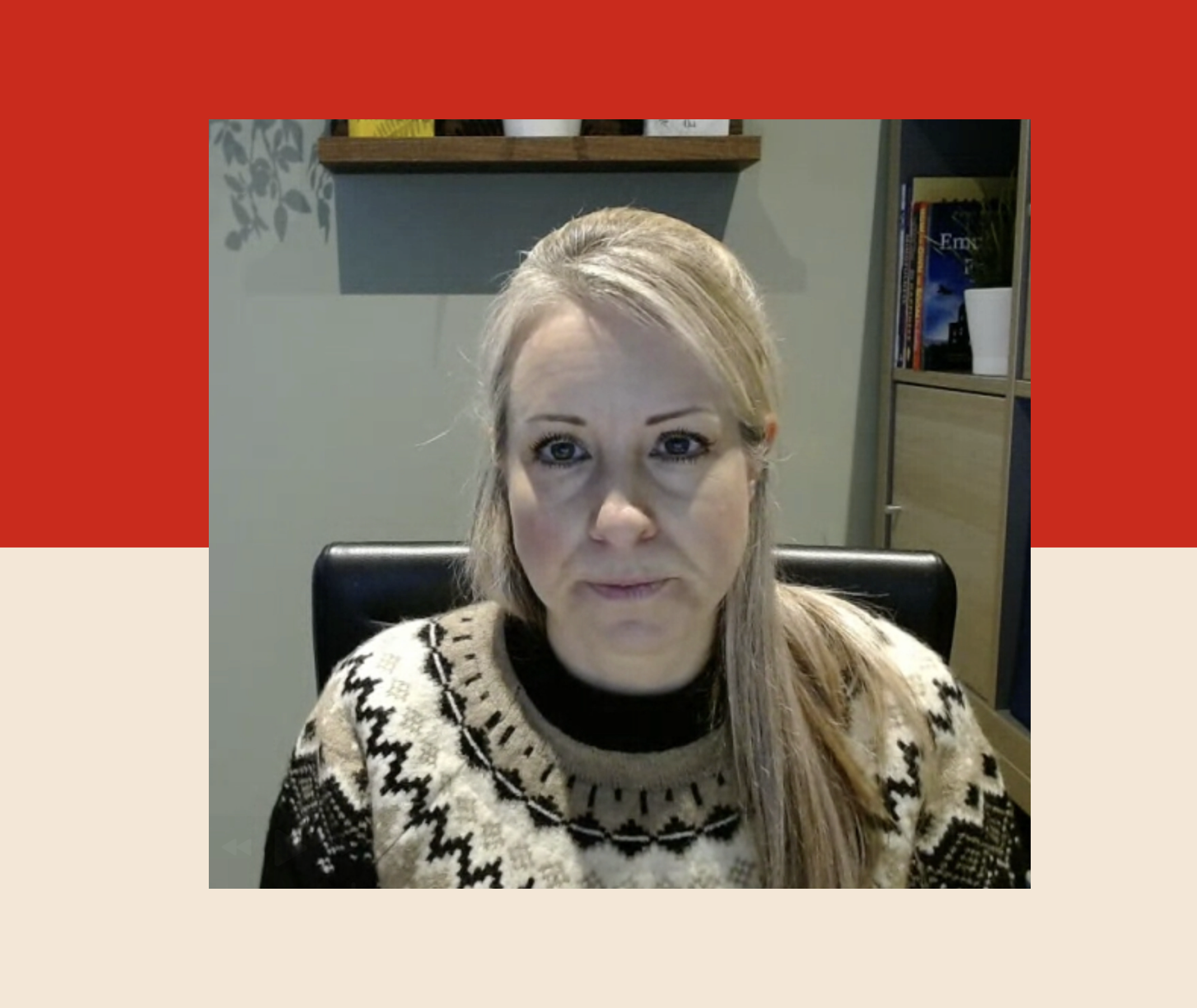
Rebecca Morris a road safety PR and marketing specialist - screenshot from a Zoom call by Charlotte Spicer
Rebecca Morris a road safety PR and marketing specialist - screenshot from a Zoom call by Charlotte Spicer
For bereaved parents like Sharron, the anxious wait to see if young drivers will be included means more to her than just a debate.
An Early Day Motion has commended the work of road charity, Brake, calling for “common-sense proposals” to be introduced, including “progressive licensing to safeguard young and newly qualified drivers.”
The launch of the Protect Young Drivers website has been a lifeline for Sharron – a recognition of her campaign work.
The AA estimates a GDL could save up to 58 lives a year, with the Government’s decision last year to rule out the scheme, Sharron feels that she and the Forget Me Not families group are “not being taken seriously.”

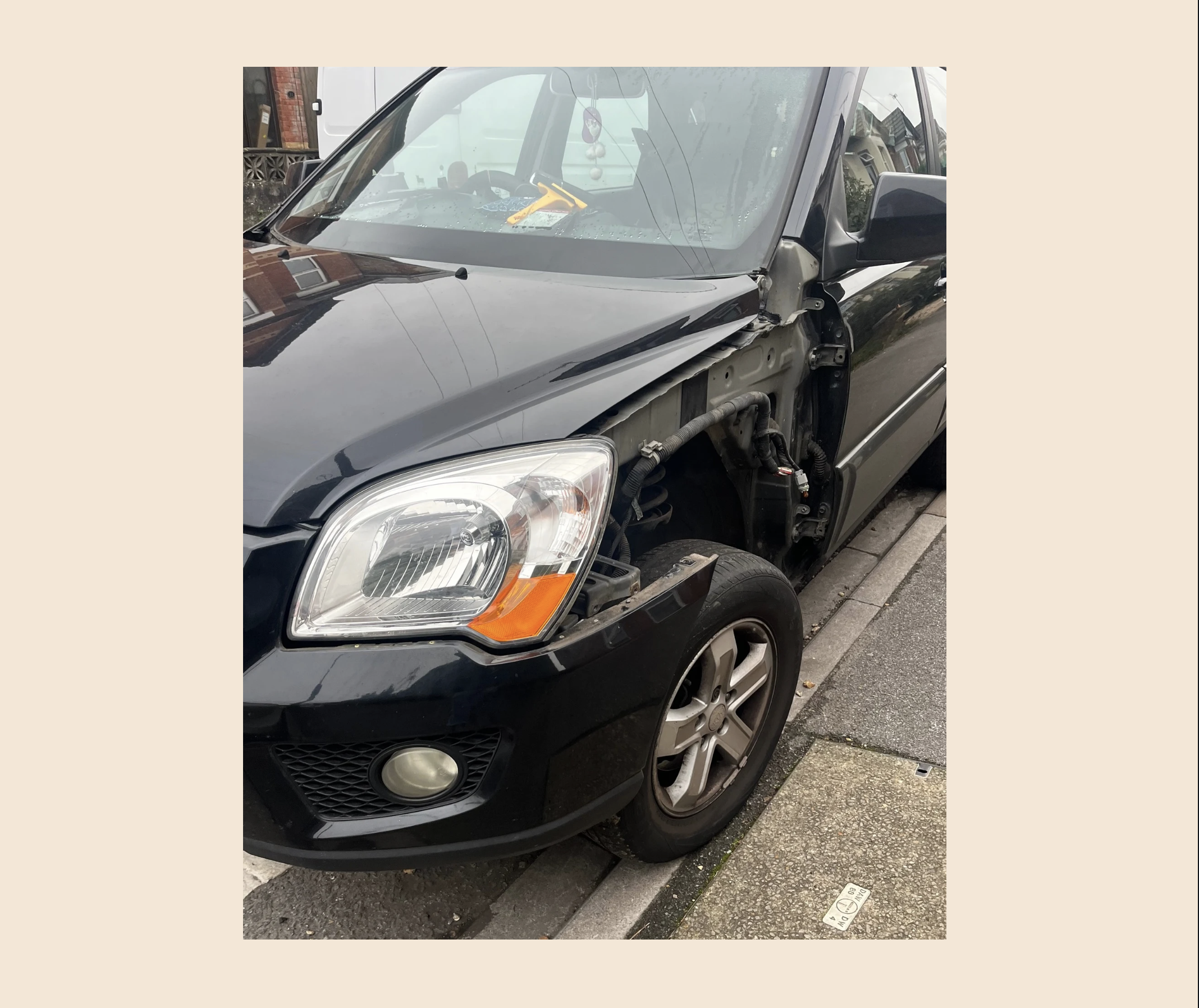
Photo - Charlotte Spicer
Photo - Charlotte Spicer
Sharron says: “The Graduated Driving Licensing should be looked at like an apprenticeship; you have a training period. Every passenger you take in your car, their life is in your hands.”
Reflecting on her lack of knowledge, Sharron wouldn’t have allowed Caitlin to enter a vehicle with a new driver if she were aware of the scheme. With the Government firmly saying no to a GDL, the campaigning doesn’t end for Sharron.
She says parents should put their own progressive licence scheme in place to “save lives.”
Sharron feels that safety measures should outweigh drivers’ feelings of independence.
“If anybody would say to me, this is restricting young drivers and penalising them. It is not about that at all. The people who are penalised are those such as my daughter, who's now buried at the age of 18, when she should be living her life.”
Globally, the leading cause of death among young people is road traffic crashes. Sharron’s campaigning will stop when she feels that teens are “protected.”
 Built with Shorthand