The Mental Game
Exploring mental health support in English semi-professional football. By Finn Payne

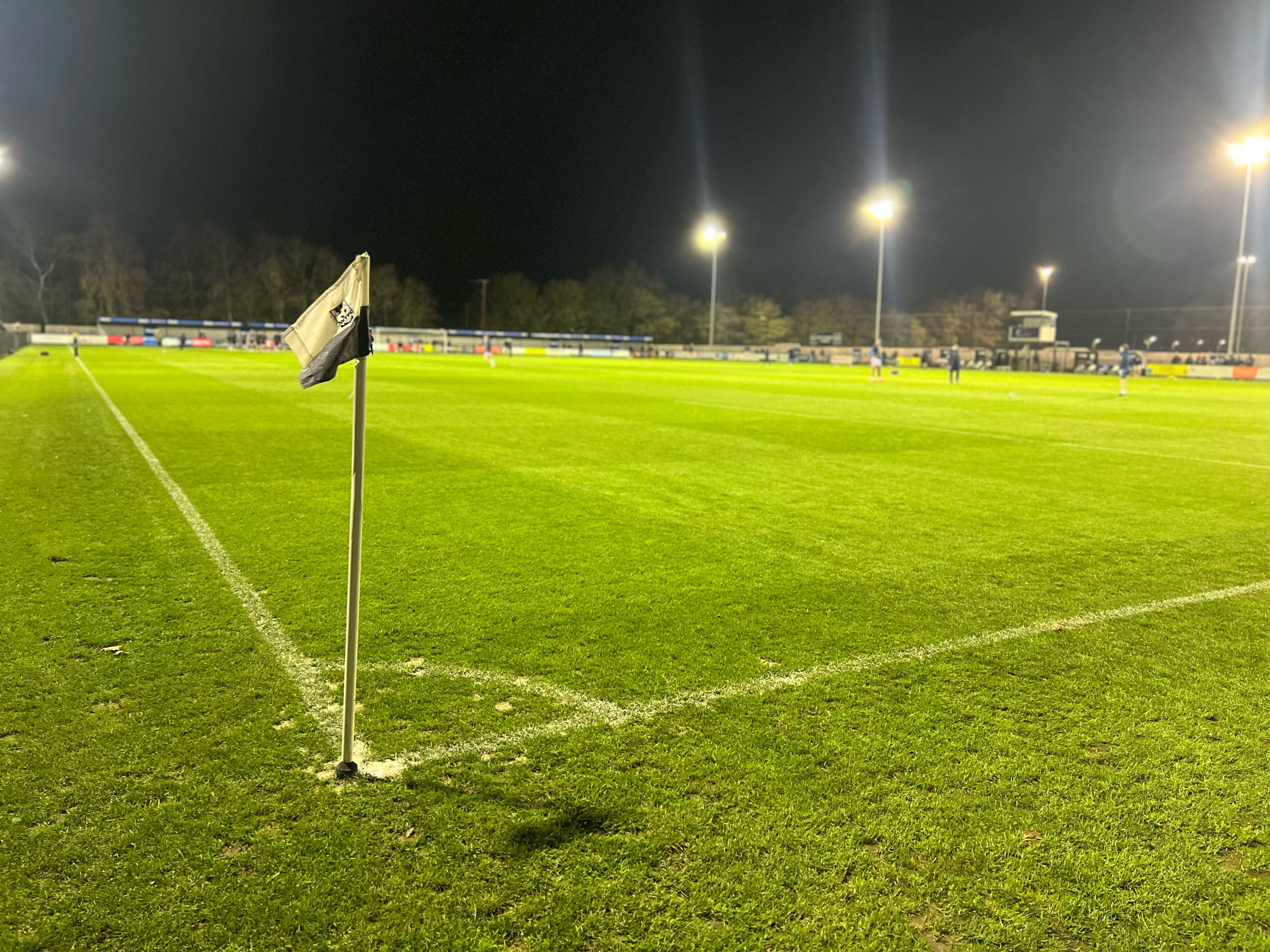
Wimborne Town's Wyatt Homes Stadium. Photograph: Finn Payne.
Wimborne Town's Wyatt Homes Stadium. Photograph: Finn Payne.
The cold hung over Wimborne Town’s Wyatt Homes Stadium as midfielder Seung-Woo Yang arrived, his breath visible in the November evening air. He stood behind the railings watching his teammates warm up, the routine he should be a part of, but is not.
A serious knee injury has sidelined Seung-Woo, known to everyone at Wimborne Town as Seuny, for an extended period and is now forced to experience his team’s game from the other side of the fence. It is a reality that many footballers face but knowing that does not make it any easier.
Seuny ruptured the posterior cruciate ligament in his knee in an FA Cup game against Bath City in September. He has been in a leg brace for the last eight weeks however has been coming to Wimborne’s games as a spectator, a new experience for the 23-year-old.
The physical setback is only part of the challenge. The impacts on his mental health due to being suddenly removed from the rhythm of football is something Seuny is still adjusting to.
Seuny said: “It feels really weird coming in to watch the games. I like it, but at the same time I hate it because I just want to be out there and I haven’t really had this much of a long-term injury before, so it’s something new.
“It’s hard mentally because I want to just be playing football, but I’ve just got to stay patient and just bide my time really.”
The physical timeline for Seuny is clear: at least four more weeks in the brace, followed by a long rehabilitation before he can return to match fitness. The psychological one is less predictable.
“You’re not really going into the club every day, you’re away from the boys, you’re not really in and round it. You just feel a bit separated, but I guess that just is what it is. And then obviously not being able to train and play games, it’s quite tough mentally.”
Semi-professional football sits below the professional pyramid. At this level players are paid to play however have full-time jobs as well. In England it covers the fifth tier and below, however certain clubs higher up may be fully professional depending on their financial resources.
Quickfire Q+A with Wimborne Town midfielder Seung-Woo Yang. Video: Finn Payne.
For semi-professional players like Seuny, injuries often expose the inconsistent mental health provision at this level of the game.
Half Turn is an organisation set up to try to bridge the gap in support for semi-professional footballers. Their survey of over 100 semi-professional football players in England found that 84% of players agree that more support is needed.

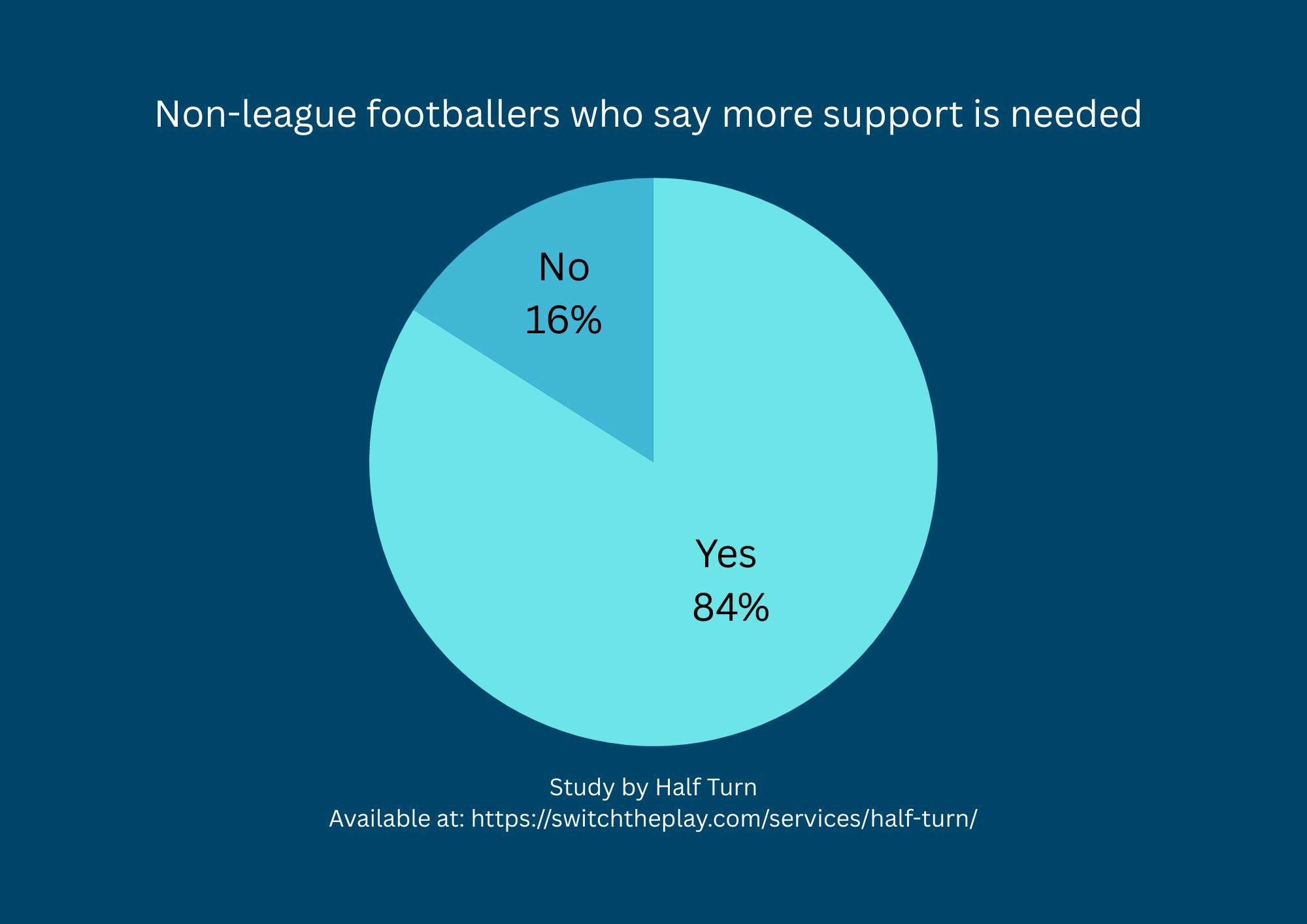
Graph by Finn Payne.
Graph by Finn Payne.
Toby Stainer-Reid is a goalkeeper for semi-pro side Poole Town, he said: “I don't think there is enough support. Obviously, it’s hard because there isn’t a budget of a professional club, so you can’t go and support 20 players and ask them how they’re doing every single session and give them extra support, which costs loads of money."
Just like local rivals Wimborne Town, Poole play in the Southern League Premier South, the seventh tier of English football.
Akin to Seuny, Stainer-Reid is currently dealing with an injury which has been keeping him out of the squad for an extended period and stunting his development.

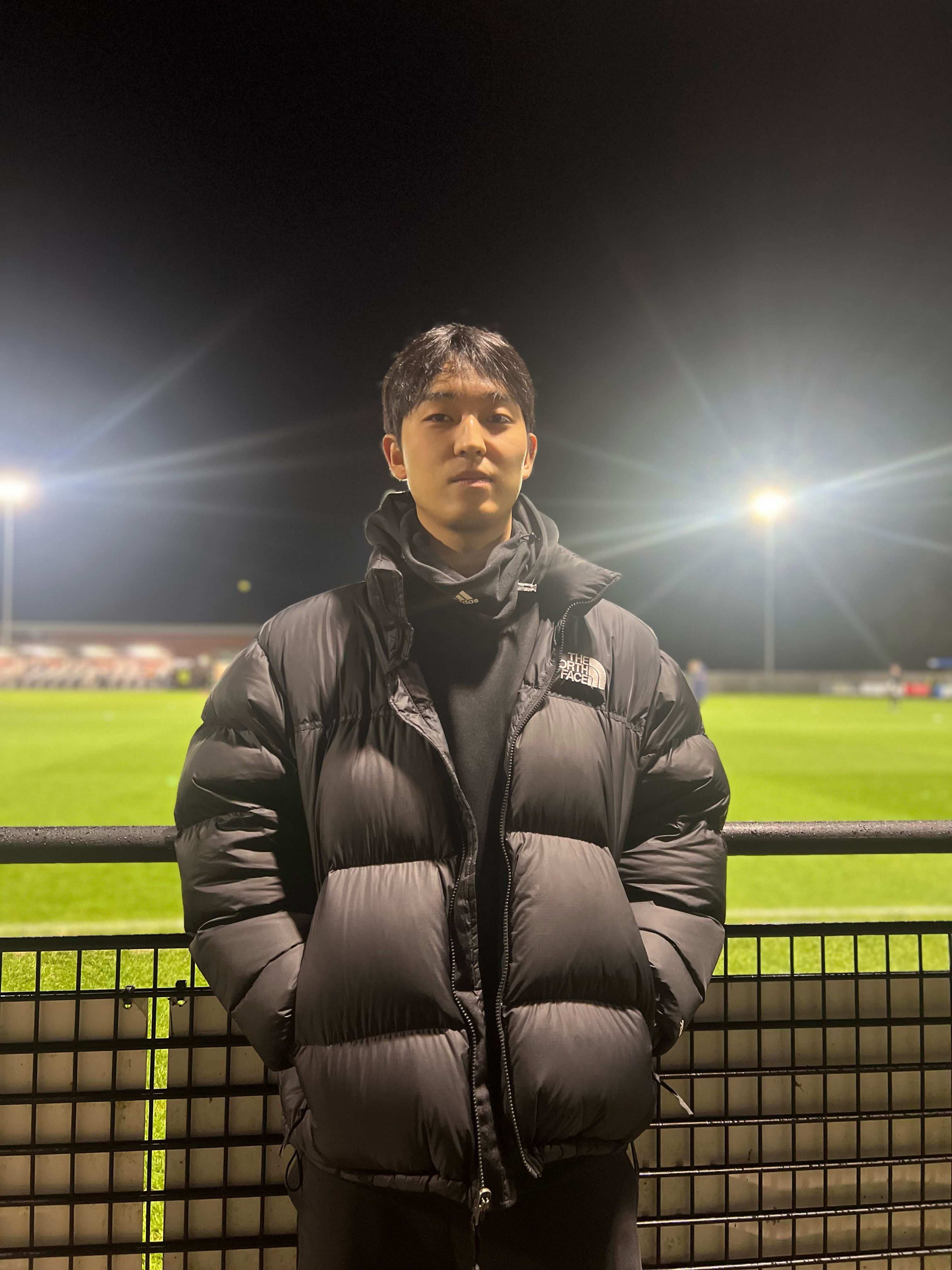
Seung-Woo Yang of Wimborne Town. Photograph: Finn Payne.
Seung-Woo Yang of Wimborne Town. Photograph: Finn Payne.
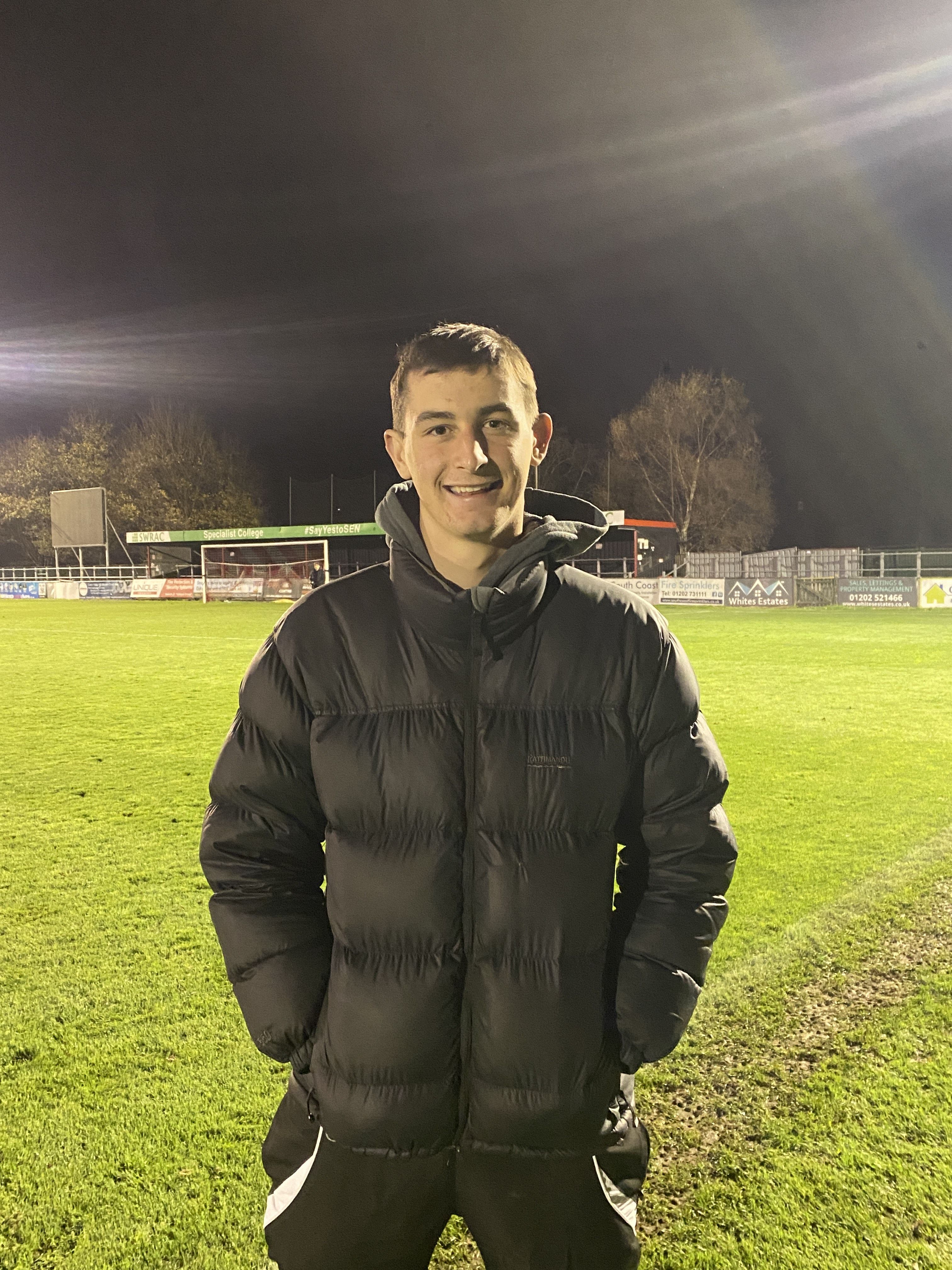
Toby Stainer-Reid at Poole Town's Tatnam Ground. Photograph: Finn Payne.
Toby Stainer-Reid at Poole Town's Tatnam Ground. Photograph: Finn Payne.
He said: “I think it’s something that non-league teams definitely need to progress, like just checking in, just working with people a lot more, maybe getting partnerships involved, something in a way that players are able to really talk and make sure that you have your players’ backing.”
Stainer-Reid has created his own TikTok page where he posts videos detailing his road back from injury. In these videos, he shares moments of vulnerability to show viewers the reality of an injury.
Shockingly, 70% of surveyed players have had feelings of self-doubt or low confidence according to Half Turn’s survey. Stainer-Reid said: “I’m quite a self-critical person. I’ve struggled a lot with my mental health. It’s hard for people these days because the expectation of you as a player is so much higher.”
“Going through injury, I found that I need to find a schedule. I need to find something else beyond football that is going to be my purpose. Creating a schedule, something such as sea swimming, going to the gym, learning new sports, that kind of thing. Keeping yourself busy is so important these days to find your purpose beyond football.”
“Now I’m looking at it and going, what’s my purpose now? Because my drive isn’t to wake up and play 90 minutes in the morning. Where’s my drive got to be now?”
Stainer-Reid strongly echoed Seuny’s experiences and shows the positive impact other sports can have on footballers going through struggles. What makes their situations even more striking is how similar two stories are, while being at different clubs. That although there could be more support at one of the clubs, both players are going through the same thing.
Dr Amanda Wilding Pinckney is a sports psychologist who has worked with many semi-pro players going through the same struggles, she said: “When players are out for a substantial period of time. That loss of identity is huge because they go from being with their team almost every day to suddenly being really isolated. Sometimes they don’t even come in to the club, or some sit in the physio room all day, every day. The boredom of not being able to do anything is really hard."
Both Stainer-Reid and Seuny’s stories highlight a wider truth within non-league football: when formal mental-health structures are not there, players are pushed into doing it themselves.
For some, like Stainer-Reid, that means finding new routines to fill the sudden absence of football. For others, like Seuny, internal factors play a big part, drawing on things such as faith to guide him through his recovery process.
It is not just injuries that can cause stress for players at this level. Unlike players higher up the football pyramid, semi-professional players have limited support when it comes to their mental health. They juggle their football careers alongside working a job and any injuries or families they may have on top of that. When you combine the lot, it can lead to some stressful times for some players.
According to Half Turn’s survey, 79% of surveyed players said juggling a job and football is stressful.
Stainer-Reid said: “Obviously most people here are part time, so you have to manage your work hours and your football hours because if you’re travelling down from London it’s going to take a lot more of your day up. Obviously, there’s a whole challenge of being able to combine the two. It’s quite hard and then additionally it’s getting to training, it’s making sure you’re there on match days. So, it’s a lot of time out of the day, just to commit to a football match which is only semi-professional."

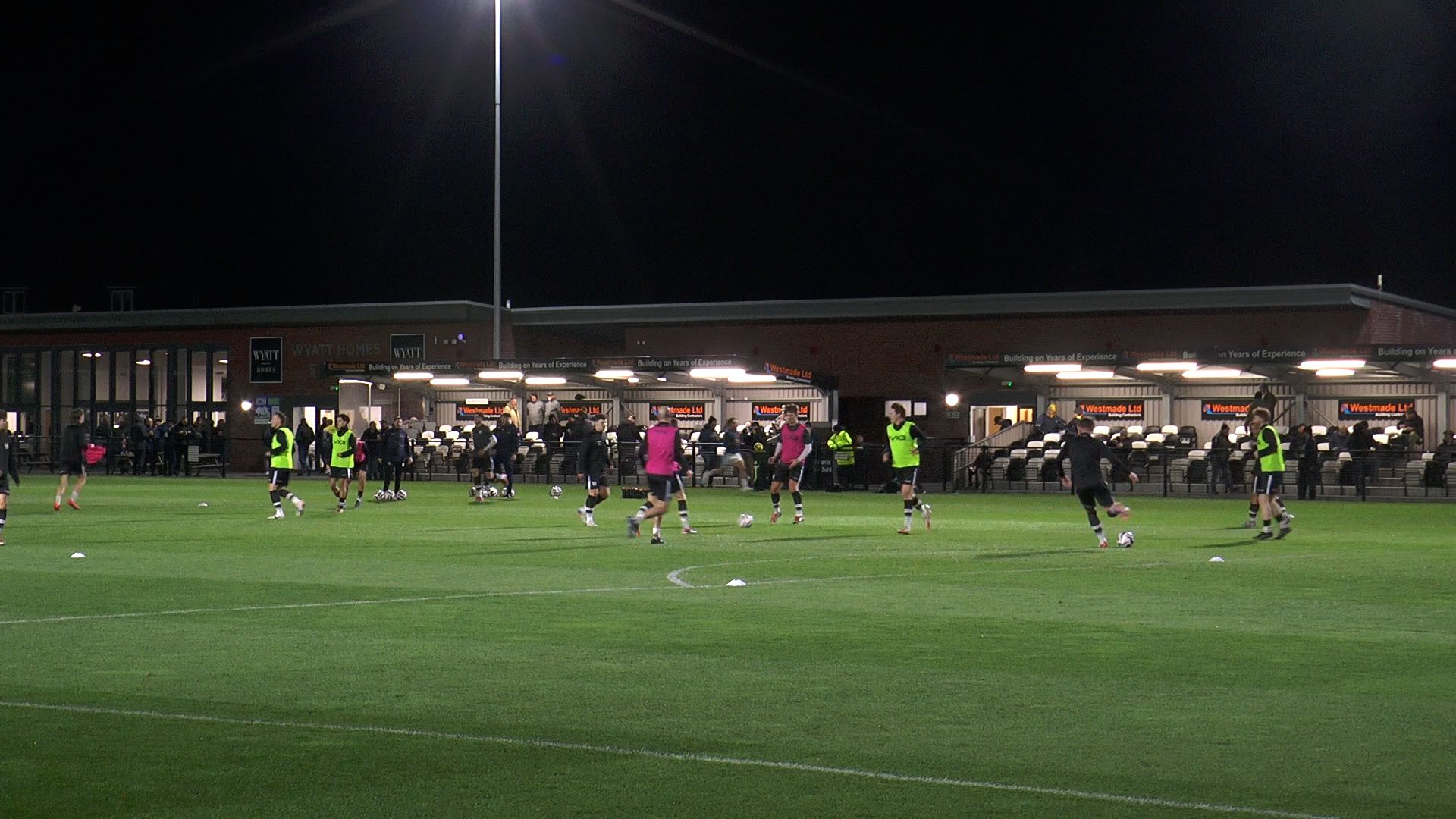
Wimborne Town warming up before their match against Gosport Borough. Photograph: Finn Payne.
Wimborne Town warming up before their match against Gosport Borough. Photograph: Finn Payne.
Footballers at a professional level have 24/7 access to the Professional Footballers Association (PFA), an organisation which provides support for any needs players may have. This includes dedicated mental health support which contains a 24/7 confidential counselling helpline that players can call for any mental wellbeing issues.
Dr Wilding Pinckney said: “Semi-professionals can’t tap into the PFA. So, I think they need that kind of thing at a semi-professional level because in so many ways they’re more vulnerable."
The alternative for semi-pro’s is to find support from independent organisations such as Half Turn however the level of funding behind these organisations is nowhere near what the PFA receives from the Premier League and EFL.
Max Oldham said: “They scream and shout about mental health, but they don't do anything. If you look at every club, social media, whether it's non-league or professional, they'll all do something when it's mental health awareness day. But do they actually help their players? And I can tell you, especially in non-league, they don't. And there's a lot of people out there that really, really need it.”
Oldham is the founder of Half Turn. His own experiences inside semi-pro football led him to setting up the organisation after seeing first-hand what is available to players.
“After lockdown I hadn’t seen one of my friends in a while and when we started training together, he admitted to me he had a really bad gambling problem.
“We tried to get help from the club and from other people we knew but we didn’t have any resources. That was kind of the point at which I thought to myself, okay, I’m just going to do it myself.”
Oldham’s foundation offers players a variety of services such as a confidential support service, an online hub of information on emotional and financial wellbeing, career pathways, and a team of experts on hand to help.
Oldham believes the main reason for the lack of support services for players is down to clubs not wanting to spend their money on it.
“They'd rather spend their money in other ways that has a tangible return on investment. And that's the problem; you're investing in the player's mental health. But can you directly correlate that to more points won or more goals scored or more people through the gate? No, it's hard to do that.”
Several voices said that to get more support, the issue needs to be more widely recognised.
Stainer-Reid said: “It’s definitely something that’s coming on and definitely something that I’m encouraging because every player is going to struggle throughout their career and it’s just about supporting them when they do.”
Oldham said: “There's still too much of a stigma around mental health. I know it's spoken about a lot, and the stigma has lessened significantly. But in terms of the scale of importance, it falls quite low on the pecking order.
“If the governing body of football said that this is a mandatory thing that you need to do, clubs would do it.”

Dr Amanda Wilding Pinckney during our interview. Photograph: Finn Payne.
Dr Amanda Wilding Pinckney during our interview. Photograph: Finn Payne.
Another reason for poor mental health in semi-pro players is the contracts the players may or may not receive from their clubs at the end of the season.
Many clubs at a semi-professional level operate on a season-by-season basis where they re-sign players at the end of the campaign or release those they do not want. The not knowing of a player’s future is often a stressful time for players which can have a severe impact on their mental health.
Dr Wilding Pinckney said: “Whether you’re going to get your contract or be released, that’s always a really tough one. Some people know it’s coming and they have to deal with that. And then others are like, okay, I’ve got a couple of different options, which one do I go to? Which is really emotional as well."
Dr Wilding Pinckney is a HCPC Registered Sport & Exercise Psychologist. She has over 20 years of experience working across multiple sports and organisations including semi-professional footballers. In Amanda’s career she has worked with organisations such as British Wheelchair Basketball, England Touch Rugby, and football team Southampton FC.
Audio: Finn Payne. Music from Pixabay.com.
For some players it is the worry of returning to their sport that causes the most stress. Players may worry that they will not be able to reach the same level of performance that they had before.
Dr Wilding Pinckney said: “They get the fear of: am I going to be fit enough? So, we look at it as if everyone is still improving while you are injured, so we don’t want to get you back to where you were, which is traditionally what we’d say. So, we want to get them back better than they’ve ever been before, otherwise the gap’s too big.”
Dr Wilding Pinckney’s approach shows what is possible when players can achieve with the right psychological support. Yet in semi-professional football, this level of guidance is only possible when players go to external support such as psychologists.
So, what need do these people think needs to be done?
These people believe that the gap in support is not going to get any better unless people start taking action and holding those accountable to question.
Work needs to be done from both clubs and the responsible footballing bodies such as the FA. I did attempt to contact several semi-pro clubs in the Dorset area and the Dorset FA for comment on this topic however was unable to get a statement from them.
Danny Matharu, founder of The Football Mental Health Alliance (TFMHA), said: “There needs to be directives from the top. Mental health needs to be on the same level as safeguarding is in football.”
TFMHA was set up to provide mental health training and resources to clubs and players alike. The organisation is trying to get every club to have a minimum of one person who can deal with any mental health issues. Matharu said: “We think that you need to have one mental health first aid trained individual, so you have a point of contact and people at the clubs know who to go to.”
“If the team’s captain is mental health first aid trained, he’s the conduit between the manager and the players. He’s in the dressing room all the time and will be able to see the signs of his players who may be struggling.”
Stainer-Reid spoke on if he thought this change would be positive for clubs and players, he said: “100% because if you have someone you can turn to that’s going to be so beneficial to you and the club as a whole because it’ll be a massive draw factor.
“If you know that you are looking after your players not only on the pitch but off the pitch mentally, then it’s so important to have something like that in place at every club.”
All of the voices involved in this piece made slightly different suggestions however a common theme that kept cropping up was the need to have someone inside clubs that players can access easily.
Dr Wilding Pinckney said: “I think every club should have some kind of wellbeing person. Whether that be a performance lifestyle practitioner or a psychologist.”
“Arguably the professional players have got so much money they could go and sort themselves out. I think the money should be invested into the semi-pro level where they don't get the same money, but they also have more pressures because they have a dual career” she added.
Oldham said: “Having access to the tools to be pre-emptive and proactive with your mental health would be my ideal way of looking at it, having a platform that everyone can access free of charge.”
He added: “And then for those with acute needs, the people that are really struggling with something or have a history of depression or anxiety, getting them access to a licensed clinical professional.”
Semi-professional football may run on limited resources but the voices within the sport make one thing clear: the mental health of its players can no longer be an afterthought.
 Built with Shorthand