THE MISOGYNY DRIVING FEMALE F1 FANS OFFLINE
By Tori Turner
From being undermined to recieving graphic threats, female motorsports fans' experiences on social media are spoiled by sexist abuse. But women are fighting back against the stereotypes to establish their place within racing communities


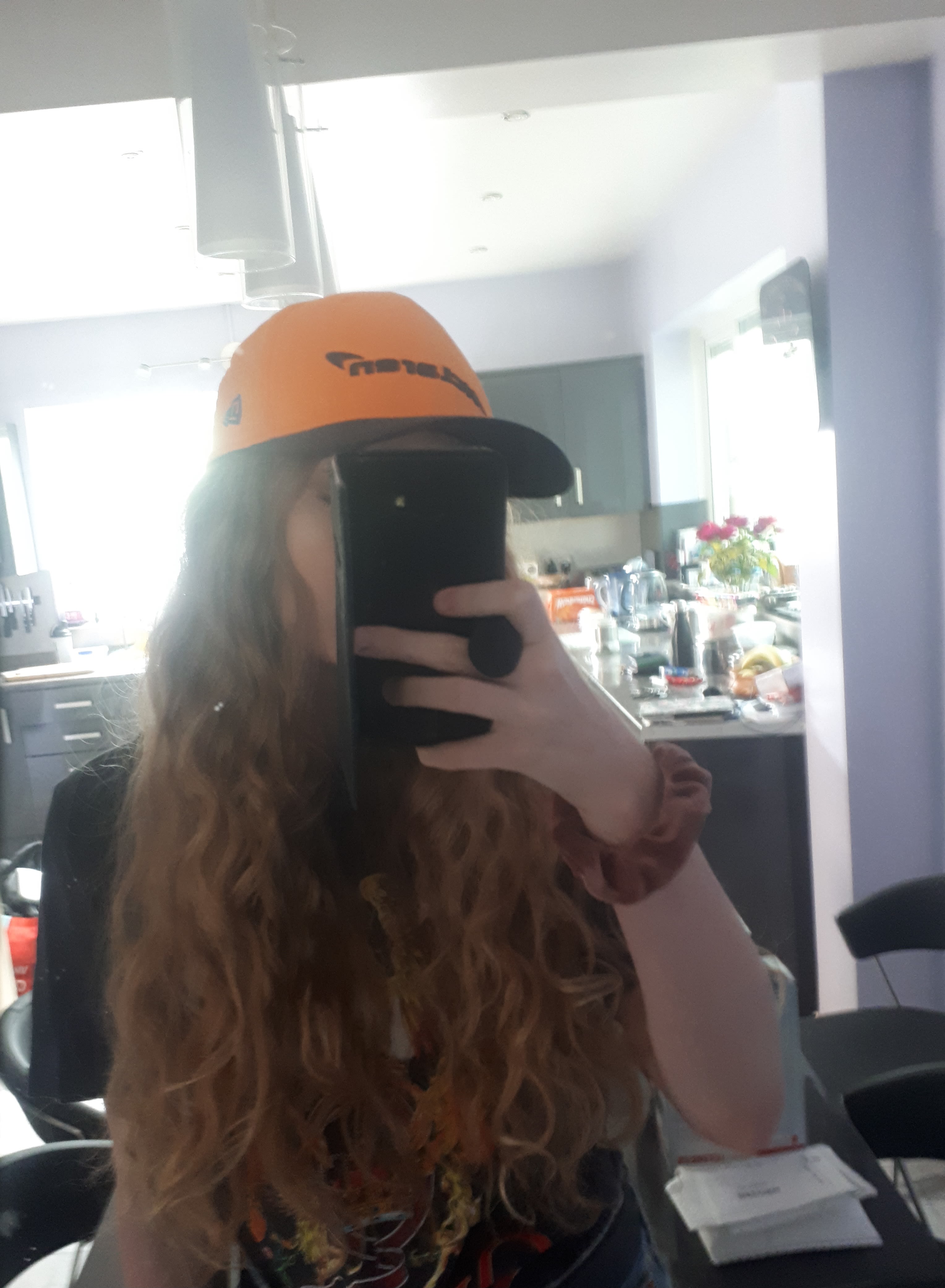
A photo of me before watching the Austrian Grand Prix in 2020 | Credit: Tori Turner
A photo of me before watching the Austrian Grand Prix in 2020 | Credit: Tori Turner


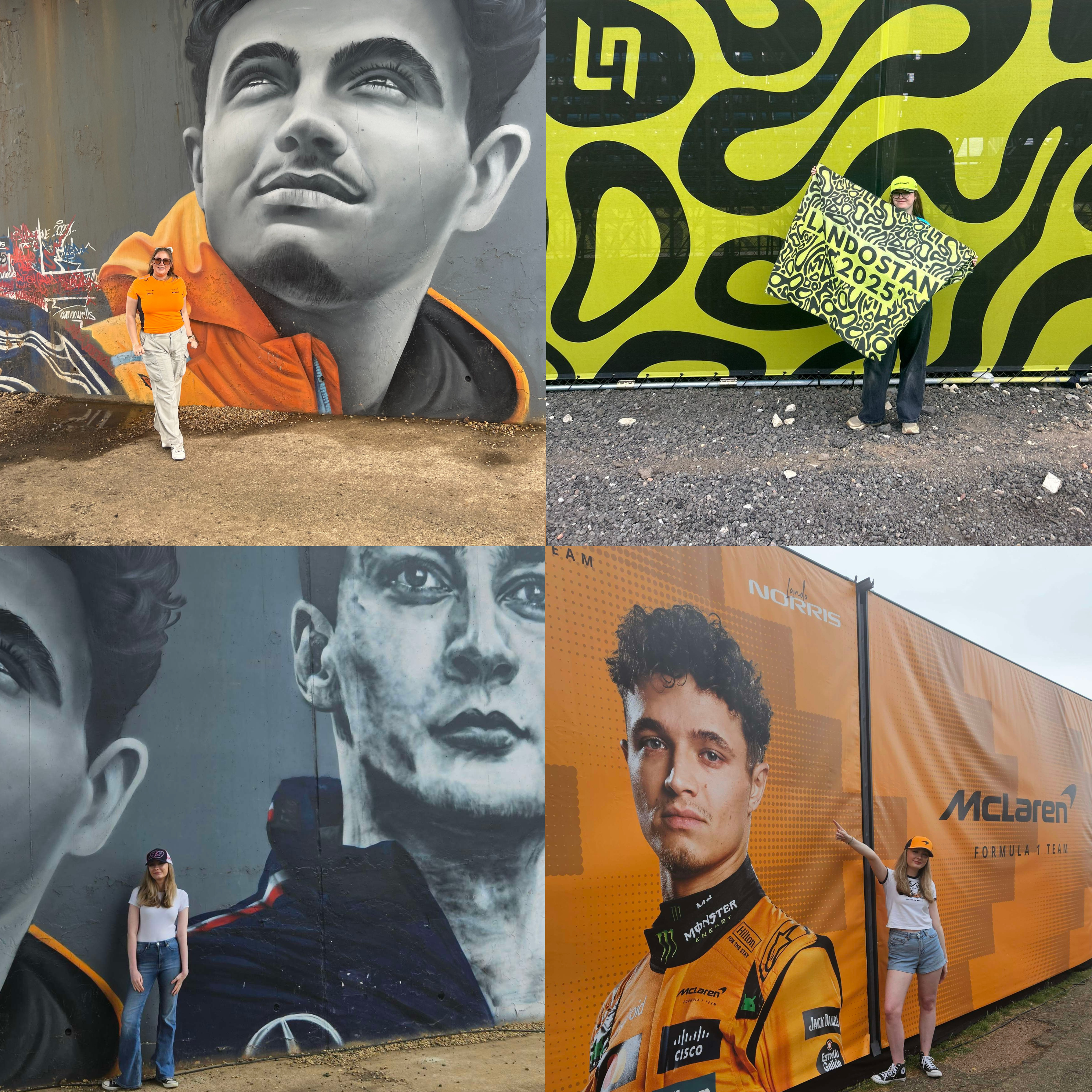
A trip to Silverstone in July 2020 | Credit: Tori Turner
A trip to Silverstone in July 2020 | Credit: Tori Turner
A new notification ping. The phone buzzes with excitement, matching my own enthusiasm after another thrilling race. Fans flock to online spaces to connect and share their opinions, still confined under a global lockdown which has deprived them of racing. It is 2020, and British driver Lando Norris has just scored his first podium in Formula One.
Like many other young, female fans, I log on to Twitter as soon as the chequered flag is waved, eager to celebrate with like-minded enthusiasts. Instead, when I open my phone, I am faced with:
“Female fans like this are a plague that needs to be eradicated ASAP”
The words stung instantly. They latched onto me, making me reconsider my place within a sport that I had grown up alongside. A target had been placed on my back for one reason only – my gender. They did not care if I had watched since before I could walk, spent my pocket money on Autosport each week, or knew every world champion. In their eyes, I had invaded their boys' club and it was clear that my presence was unwelcome.
My experience is not unique. It echoes the opposition that all female motorsports fans face when logging onto social media. Extreme encounters involve explicit threats of rape and murder, leaving women frightened to share their passion online with these risks. Five years have passed since then, and online spaces have continued to grow even more hostile towards female motorsports fans.
“DTS fangirls”
As of 2025, female fans account for approximately 42% of all F1 fans. The staggering rise has coincided with the sport's own surge in popularity, which has skyrocketed to 827 million fans in recent years. The newfound popularity can be attributed to Liberty Media’s acquisition in 2017, with the American owners eager to modernise the sport through social media and digital platforms. Two years into the takeover, Drive to Survive was announced, a docuseries that would give fans a unique insight into the behind-the-scenes moments. Since then, the series has evolved into an international phenomenon, known for its controversial dramatisation of events.
However, the series has also contributed to one of the most common stereotypes female F1 fans face on social media. Despite research showing that only 16% of newer, younger female fans cite DTS as their gateway to the sport, digital users are quick to apply the label. The term ‘DTS fan’ is often used to dismiss females’ knowledge of the sport, inferring that they are only interested in drama rather than the racing.

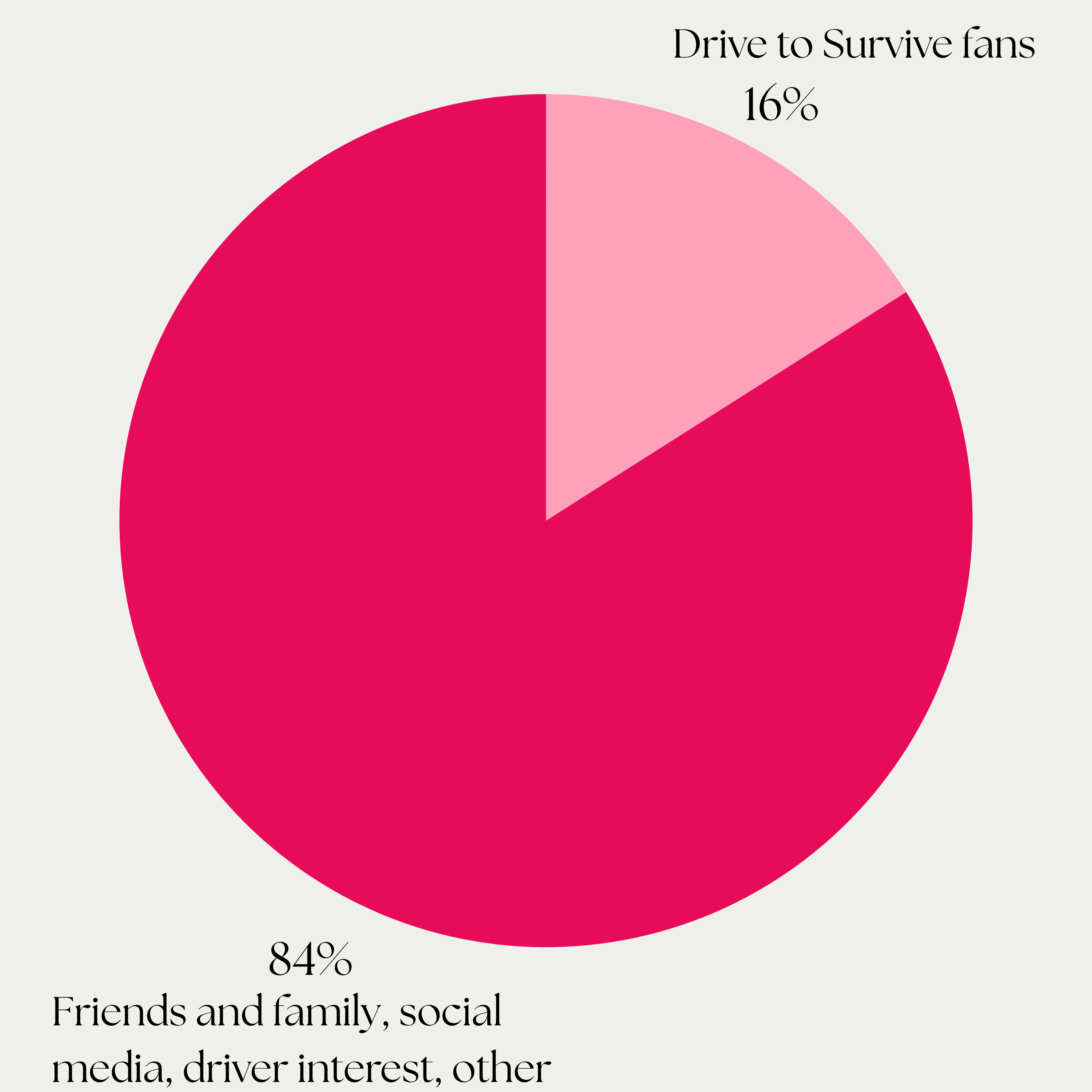
Source: Global F1 Fan Survey 2025
Source: Global F1 Fan Survey 2025
Amy Hamerslagh, a journalism graduate who runs her own F1 podcast, is part of the minority of female fans who discovered the sport through the Netflix series.
“I was a Drive to Survive fan,” said Amy, who first chose to load up the hit show after being unable to escape the buzz of the 2021 season. “I thought, I'll put Drive to Survive on and see if I can get into it. While I was doing my revision for my A-Levels, I had it on in the background and I found myself actually not revising anymore because I just became obsessed with this whole new world.”
Whilst the term originated online and often populates comment sections, Amy notes that it has been directed at her by male fans when attending races, illustrating the influence virtual stereotypes have.
“When I went to Singapore, my mum and I were in the queue getting some food after one of the practices and an Australian guy came up to us. Obviously, a bit of a rivalry there as he was an Oscar fan and we are Lando fans, but he went ‘I’m assuming you’re Drive to Survive fans. ’ It was true, he got it right, but why would he assume that? It felt like it was a diss, and I just thought to myself that I’ve not travelled 17 hours across the world to come and watch a sport because I like the TV show.”
Since first watching the show, Amy has grown her enthusiasm, spent countless hours educating herself on F1 and attended multiple Grand Prixs in person. There is no doubt that her knowledge is plentiful, yet her identity as a fan is made to seem inferior on one basis.
But what about the other 84% of young women who have recently discovered the sport?
Aditi Saraf lives in the United States, where F1 has experienced significant growth, with 75% of new fans being female. Aditi fell in love with the sport when studying abroad in Wales. Her friends were obsessed with F1, and she was eager to see what the hype was about before she became hooked herself.

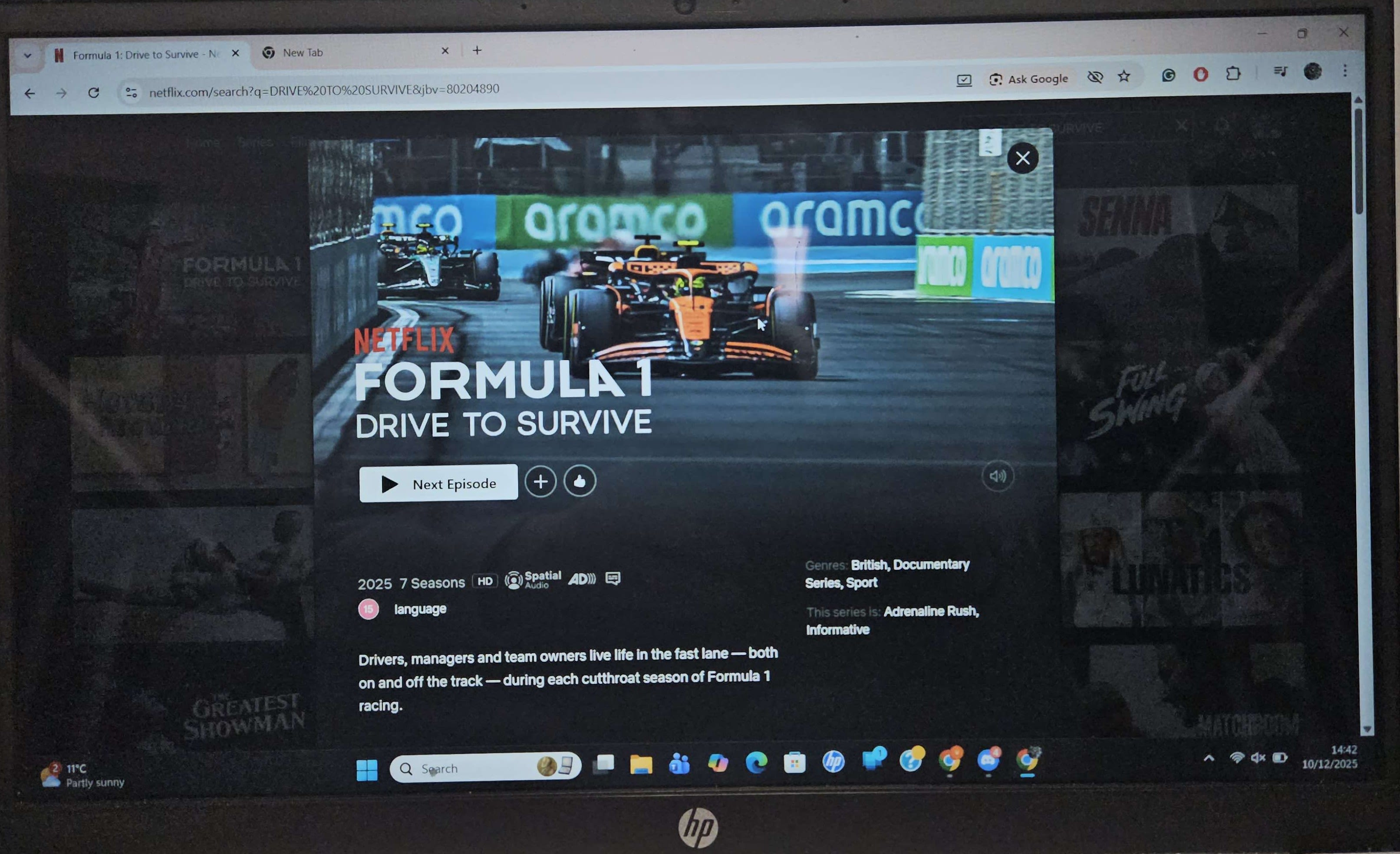
A preview for the hit docuseries | Credit: Tori Turner
A preview for the hit docuseries | Credit: Tori Turner

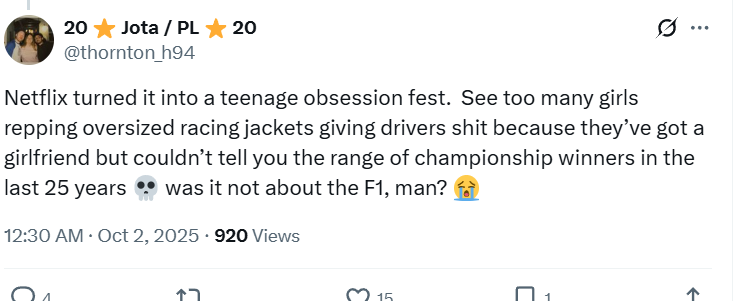
An example of the 'DTS fan' stereotypes found on X | Credit: Tori Turner
An example of the 'DTS fan' stereotypes found on X | Credit: Tori Turner


Amy attending the 2025 Singapore Grand Prix | Credit: Amy Hamerslagh
Amy attending the 2025 Singapore Grand Prix | Credit: Amy Hamerslagh
“I always feel hesitant when someone asks me how I got into the sport because I don't want them to have an impression that I know less. If I enjoy a TV show and then I've got into a sport, there's nothing to hide about that.”
“Do you even know what DRS is?”

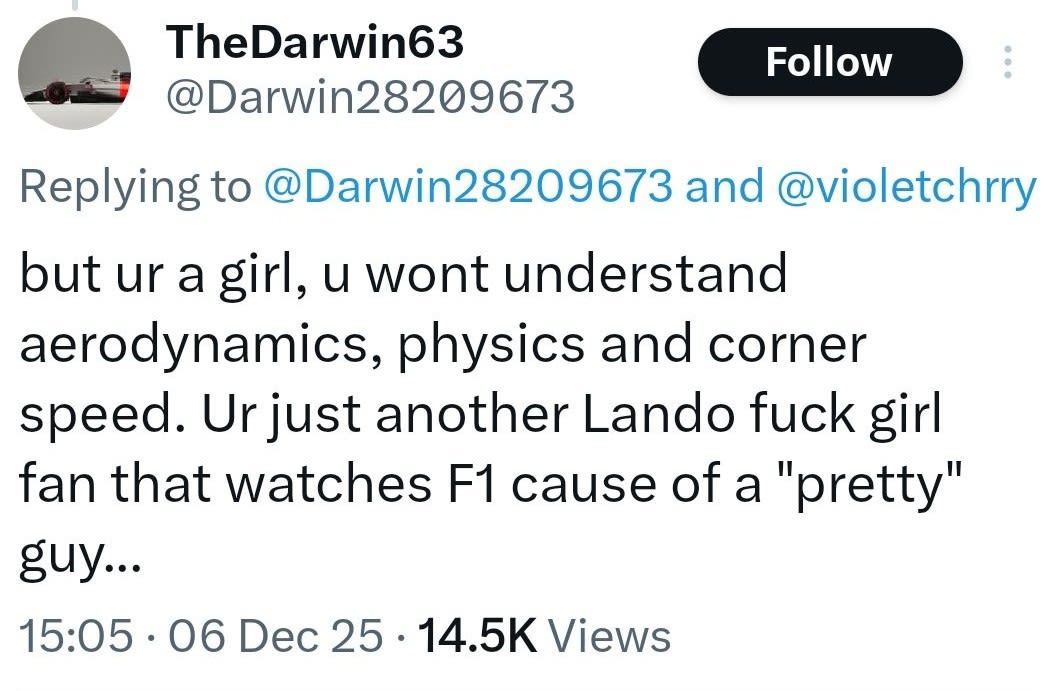
An example of how female fans' knowledge is undermined, found on X | Credit: Tori Turner
An example of how female fans' knowledge is undermined, found on X | Credit: Tori Turner

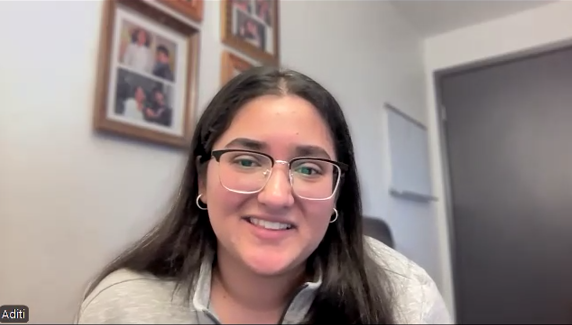
Aditi Saraf during our interview | Credit: Tori Turner
Aditi Saraf during our interview | Credit: Tori Turner
“It’s only an argument they use against women.”

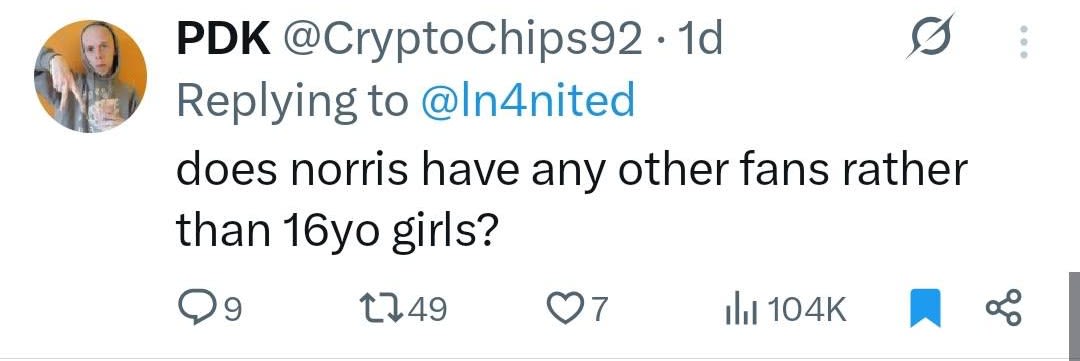
An example of how Lando Norris' fanbase is reduced to teenage girls, found on X | Credit: Tori Turner
An example of how Lando Norris' fanbase is reduced to teenage girls, found on X | Credit: Tori Turner
One label is not enough to undermine a woman’s interest in motorsport – they must also be subjected to a vigorous interrogation of their knowledge. Female fans are expected to name every world champion on the spot, or recall the winner of the 1975 Dutch Grand Prix (James Hunt, for your information). Women have never claimed to have the genius of Adrian Newey, yet are expected to explain the complexities of aerodynamics and engineering concepts.
“It’s something I’ve learned because I’ve been a fan of several different sports. I’ve always realised that a woman has to know 10 times more about the sport to be considered as the lowest level of a fan,” Aditi explained, having grown up watching and playing football. “Misogyny exists, unfortunately, in a lot of the major sports. It’s similar experiences that I’ve faced in a lot of them.”
Aditi’s experiences throughout different sports mirror research conducted by anti-discrimination group Kick It Out, which shows that the most common abuse female football fans face online is “dismissive remarks undermining their opinions.”
Females also have their interest reduced to finding the drivers attractive, another notion that women have to fight to disprove each time they announce their support for Lando Norris or Charles Leclerc, the two drivers most commonly associated with this view. Lando’s fans are typecast as teenage girls who find him ‘pretty’, though if you take a trip to Silverstone, you will find plenty of grown men sporting his merchandise.
“It’s that whole idea of I’m watching a race where I can’t see their face for two hours. Why would I want to watch a sport where I can’t even see these so-called good-looking drivers?” Amy laughed when challenging the assumption she often faces. As soon as men find out her passion for racing, they’re quick to guess she must support Lando for that very reason.
To Aditi, the presumption is “disheartening and discrediting”. The Global F1 Fan Survey, once again, disproves these claims. Female fans' primary motivations are the thrill of racing, being a fan of the drivers and enjoying the strategy.
Whilst some fans may be drawn to the sport by drivers' looks, it does not mean that they should be shamed or ridiculed, especially when their enthusiasm extends beyond those boundaries.
“I just want to see them suffer”
Despite being rooted in sexism and exclusion, the aforementioned examples of stereotypes that female motorsports fans face online are generalisations. But many women face intrusive, personal attacks when they unlock their phones.
“Unfortunately, when you’re a woman on the internet in front of a guy who’s hiding behind the screen, I feel like the man will always win because they will get into the very graphic threats and comments,” Marine Goupil, founder of fanpage Girls Off Track, said. “Sports is the only reason why I got rape threats because I didn’t agree with a man on the internet. I think that’s a bit excessive for someone who doesn’t share your opinion.”
Sexual harassment via inappropriate, suggestive comments is also present, objectifying them under selfies where they’re sporting teamwear. No matter how, all aspects of a female fan's identity will be scrutinised with one clear objective: to break us down.

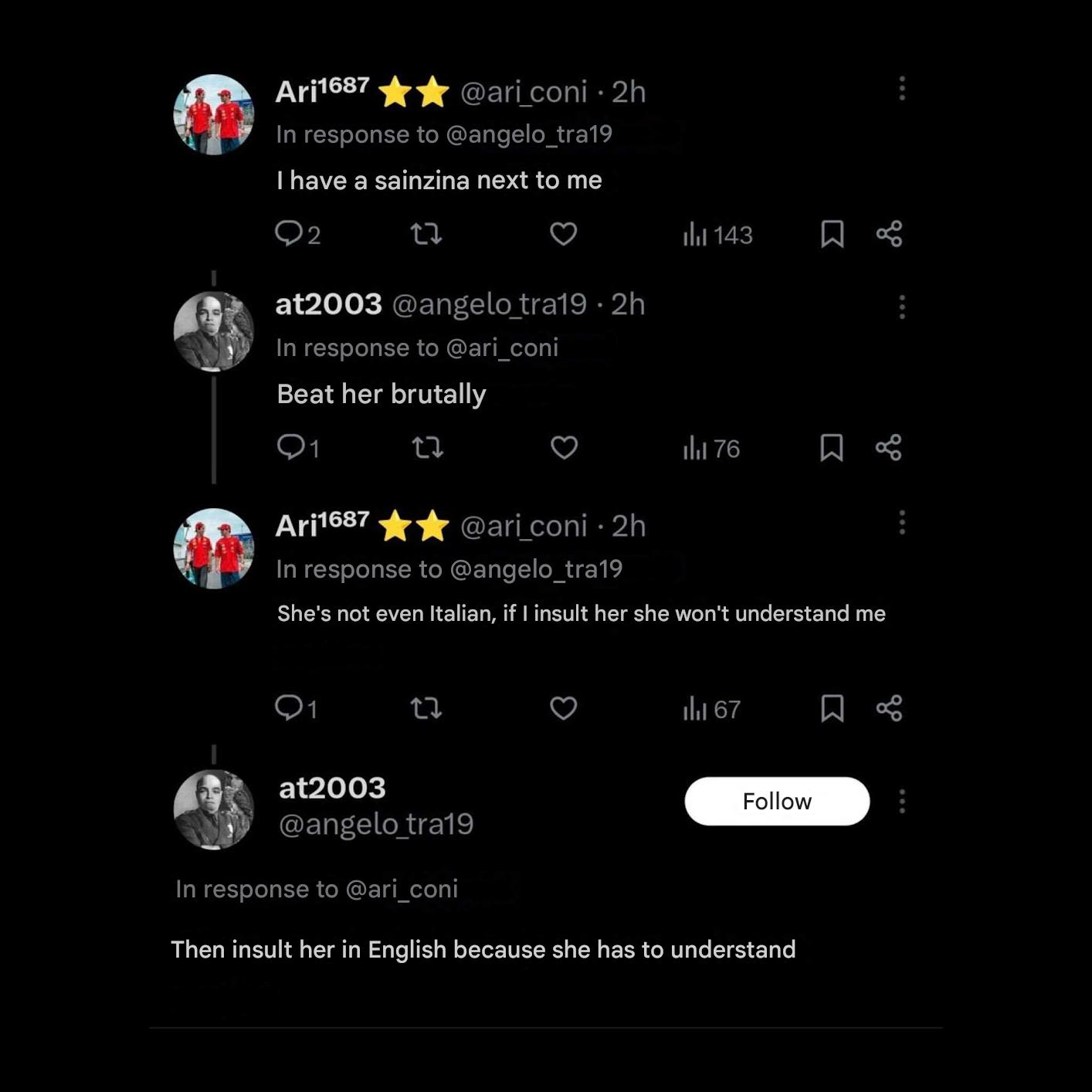
An example of vile comments directed to women, translated from Italian on X | Credit: Tori Turner
An example of vile comments directed to women, translated from Italian on X | Credit: Tori Turner
“Not just motorsports”
A video explainer which expands on the online abuse that female fans face in all sporting communties.
“The F1 big sisters you wished for”
“We wanted to bring more girls into the conversation and be able to teach them the basics, so they would never get that remark anymore.”

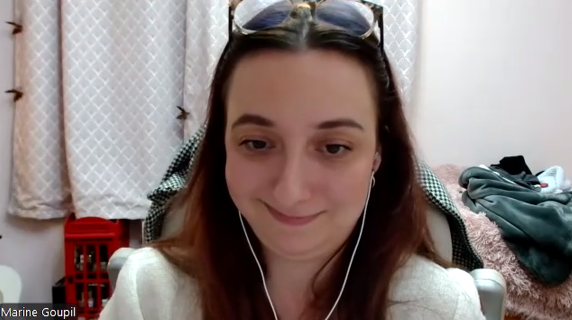
Marine Goupil during our interview | Credit: Tori Turner
Marine Goupil during our interview | Credit: Tori Turner
“It creates that sense of comfort for you. It’s almost like a home.”
In the wake of facing relentless abuse and exclusion on social media, female fans have forged their own inclusive spaces, unafraid to combine femininity with all aspects of racing. They thrive within these communities, forming bonds with other women over their passion for motorsport. GirlsAcrossTheGrid, TheMotorsportGirlies and GirlsJustWannaF1 are just a handful of these accounts leading the change.
After spending years being hesitant to create a female-inclusive page as she thought there would be little interest, Marine Goupil launched Girls Off Track in 2021. Her doubts were proven wrong, as four years later, there are over 7,000 fans who tune in to their content.
Born from her own experiences, Marine initially focused her content on the technical and sporting aspects of F1 in an effort to counter the criticism that female fans face.
“It sparked the idea of having a community of girls who understood the sport, who would be able to explain everything to the newbies and have fun with the sport. The idea was to be able to offer space where everyone would be welcome to ask questions and get answers,” Marine said.
Since the account was launched in 2021, they’ve posted explainers and deep dives into F1 history, attended the French Grand Prix, and created fanbooks for Pierre Gasly and Esteban Ocon. But the best experience is how Marine and her co-founders have brought thousands of women together.
“The most beautiful part is how the girls have rallied together to cater to ourselves. We filled the gap that nobody else really cared to fill. That’s the most interesting part of being a fan girl in the Formula One space is the idea that we had to make our space,” Marine added.
Accounts such as GirlsOffTrack are a great starting point for women who are looking to find their place within the motorsports community, but many form friendships from stumbling across tweets. In the face of adversity, women seek support from each other on social media, finding positives on the same platforms where they are abused.
“When I get to meet another woman who’s into Formula One, immediately it’s like you’ve got some sort of connection. You’re both in a position where you are looked down upon as a fan and you’re not treated seriously,” Aditi said, before describing how bonded with her second-year flatmates because of F1, an experience which mirrored my own. I met my first-year flatmate on social media in 2020, three years before we applied to the same university. We still watch races together to this day.
“A unique angle of research”
Since first entering the online space in 2020, little has changed to ensure the safety of female fans within the motorsports community. If anything, the situations they face have grown more dire. With no research on these experiences thus far, Kimberley Wyllie is working alongside the FIA as part of their United Against Online Abuse scholarship to uncover the abuse they face and how it affects their identity.
Kimberley was first drawn to the topic through her own experiences as a female fan and her exposure to the discourse it holds online. After realising there was little research on motorsports, she decided to “capture this unique angle that has never been considered before but is now the largest growing fanbase which needs to be protected.”
Kimberley is currently conducting surveys, which will provide an initial understanding of female fans’ experiences with online abuse on social media. Afterwards, she will run focus groups with participants where more detailed answers can be shared, alongside finding out what changes they’d like to see.
“The plan is to uncover these real-life examples,” Kimberley explained. “It’s all fine for governing bodies in the FIA to assume what the female fan experience is or what they want or what would make their life easier, because at this point we’re assuming that they want a policy change. But it could be that actually, yeah, things are pretty crappy, but they’d rather it is how it is and they fend for themselves.”
I posed the question of what changes they’d like to see implemented to all of my interviewees, interested to see how they would respond. Many discussed the importance of increasing female voices within the sport, as well as acknowledgement from F1 and the teams themselves.
Kimberley’s research is the first of its kind within motorsports, bringing much-needed attention to an issue that has been previously overlooked. Before starting her research journey with the FIA, many individuals within the governing body were initially unaware of the controversies female fans face, which shocked her.
“People in that sphere are naive to what’s going on in the fan culture,” Kimberley said. “I’ve worked with a couple of different people within the FIA and the different commissions they have and the first question is always ‘Does that really happen? I never would have thought that’. It’s almost like there’s a degree of blinkerage on.”
The FIA has previously posted statements in defence of drivers facing online abuse, but has not yet condemned the mistreatment of female fans.


Kimberley Wyllie during our interview | Credit: Tori Turner
Kimberley Wyllie during our interview | Credit: Tori Turner
“Constantly reading those types of comments or seeing that portrayal online, that can also impact your identity and your relationship with the sport.”
“A male problem”
The misogyny that female motorsports fans face on social media stems from men posing behind faceless accounts. A quick scroll through their accounts will show a pattern of abuse, repeatedly targeting women for their passion. But this does not account for all men; there is a growing voice of those who are showing compassion and speaking out against the matter.
Rhys Hollingsworth is just one user who is using his platform to make a difference. In early September, he posted a detailed thread in which he denounced the misogyny he’d witnessed on X, ensuring that all the women who read his post knew they were welcome on his page. I was immediately struck by the mention of his young daughter, whom he is hesitant to introduce to the sport because of the high levels of abuse.
"Misogyny is not a female problem. It's a male problem. Men need to be the ones who speak up and men need to be the ones who act, because it's not women who are causing misogyny, it's men who are causing it. It's our problem and our thing to fix," Rhys said.
“It does make me think, ‘how are we in 2025 and people still have these viewpoints?"
Talking to Rhys about his daughter was a moment of realisation that if this harassment continues, we are at risk of losing future generations of female fans.
"When she's old enough to be on social media, I hope it's going to be a completely different landscape. If my daughter was a teenager now going on Twitter, I really wouldn't like her to be in that space because it's very toxic."
Posts from men like Rhys show that the tides are shifting, indicating a possibility for narratives to change and for females to exist in these once male-dominated communities without fear of discrimination. But there is still a long way to go.
“Prove them wrong”
The struggle that female fans face when posting about their favourite sport online is not new, nor will it disappear soon. As long as social media exists, backlash and discrimination will follow. There will always be an anonymous figure lurking behind the screen, ready to try to discredit your opinion and make you feel small. Do not let them win. Hold your head up high and continue to show your support for your favourite driver.
In the words of F1TV presenter Laura Winter, we are here to stay and we belong.
Aditi, Amy and Kimberley share their advice for new female motorsports fans. Free license for background music: Peaceful Ambient Soundscape by Matio888 -- https://freesound.org/s/796052/ -
 Built with Shorthand