
The road to victory
How an election campaign is fought, and won.
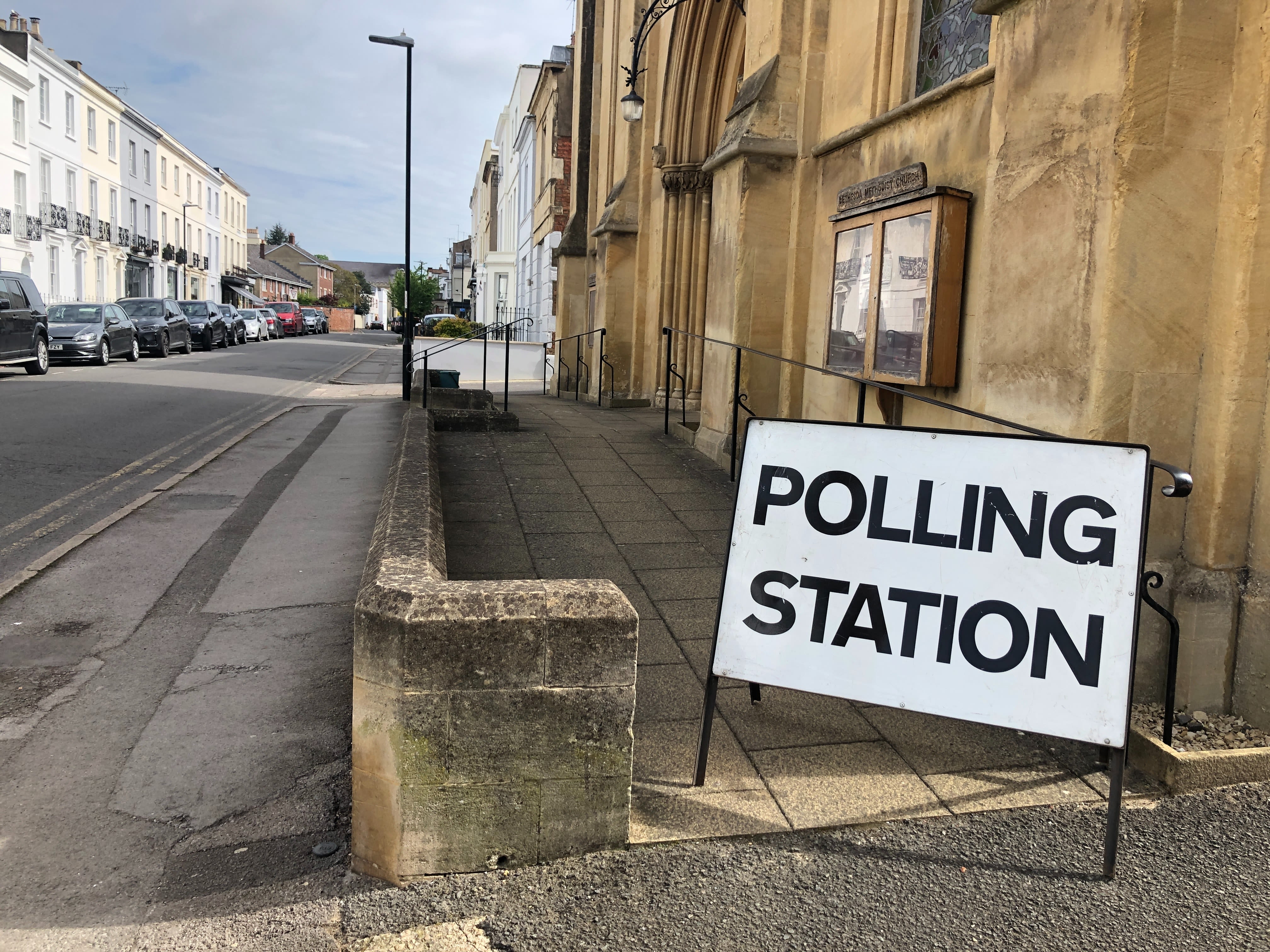

24th April 2024
Reform UK

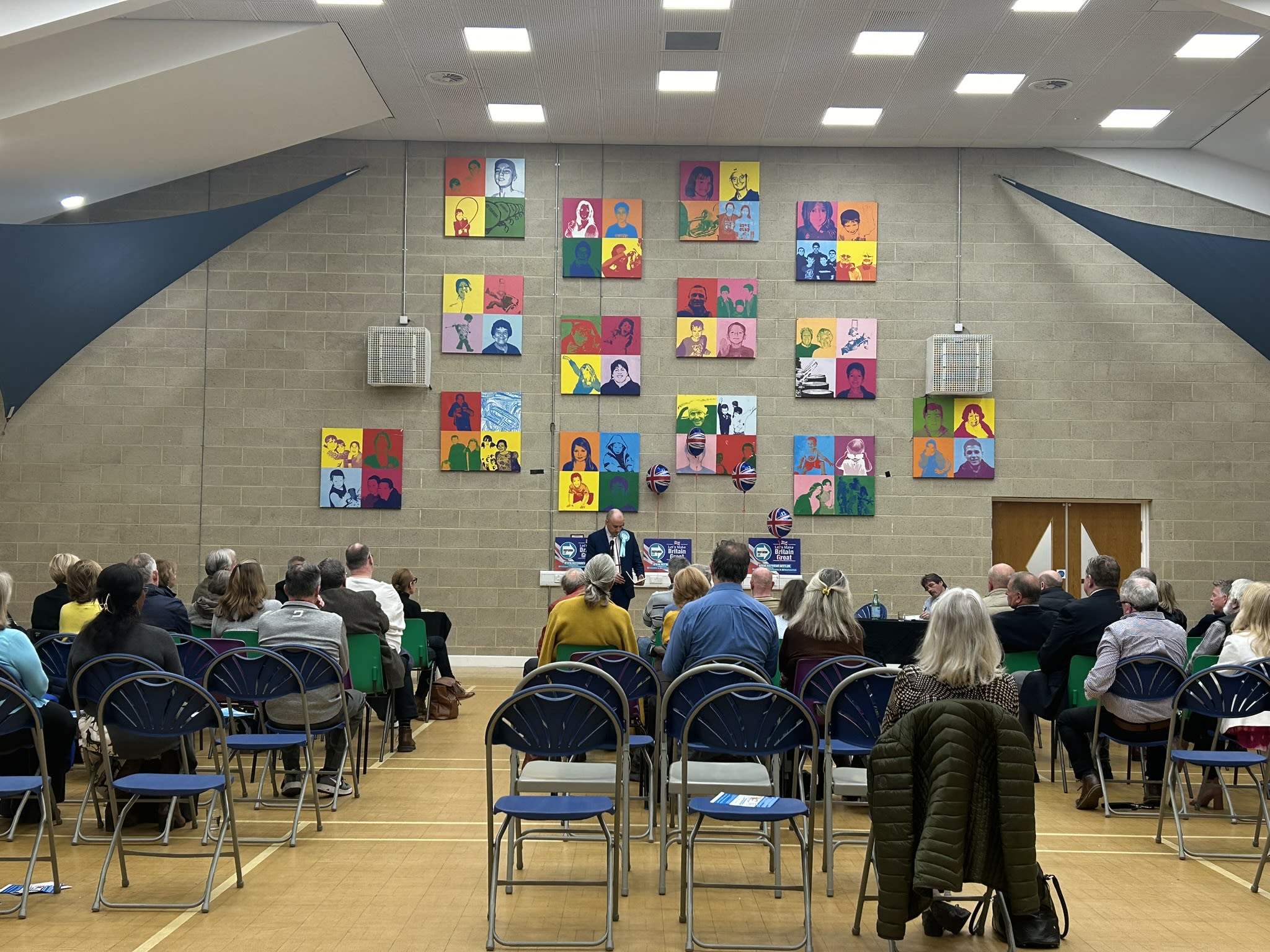
Inside a community hub in Eastleigh, a modest crowd was gathering, nervously waiting to hear from one man. Ben Habib - the deputy leader of Reform UK.
A group of party members sat patiently on rows of small plastic chairs; some had come alone, others with friends or partners. After checking around the room, it became clear that the party failed to target the younger generation.
When Habib, introduced as ‘Mr Brexit Ben,’ walked into the room, the applause could not be ignored. His ability to control and engage a crowd is fascinating. The room sat in silence and listened, occasionally stopping to either applaud or look at each other in outrage.
Phillip Crook, the campaign lead for Reform UK in Southampton, told me that their event aimed to update members on the party’s message and keep their finger on the pulse. He emphasised their difficulties as a new party building up from the ground. But is a party under the leadership of Nigel Farage in a previous name really one building from nothing?
"I am in politics because I believe the UK is facing an existential crisis on multiple levels."
27th April 2024
Labour Party campaign

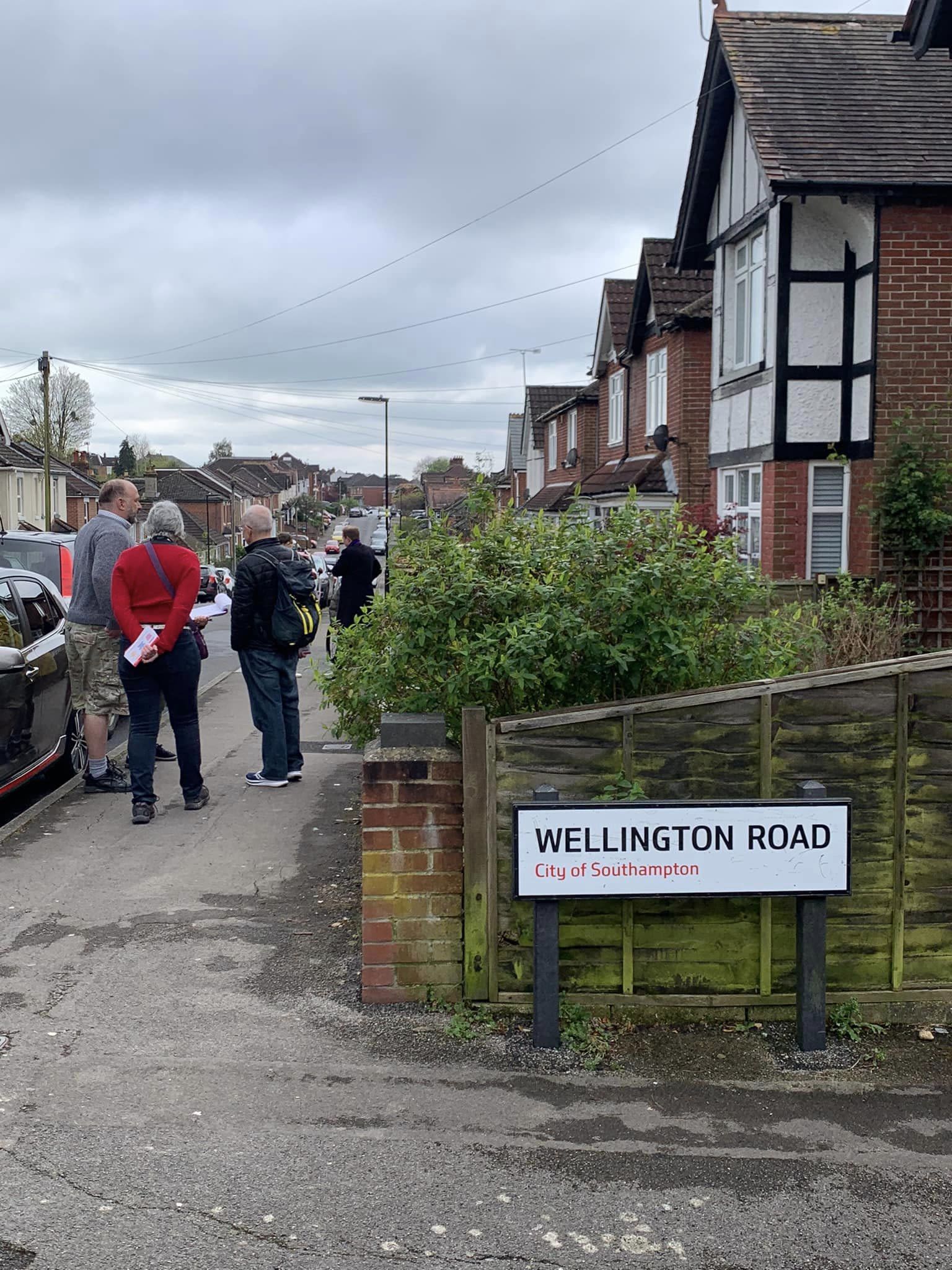
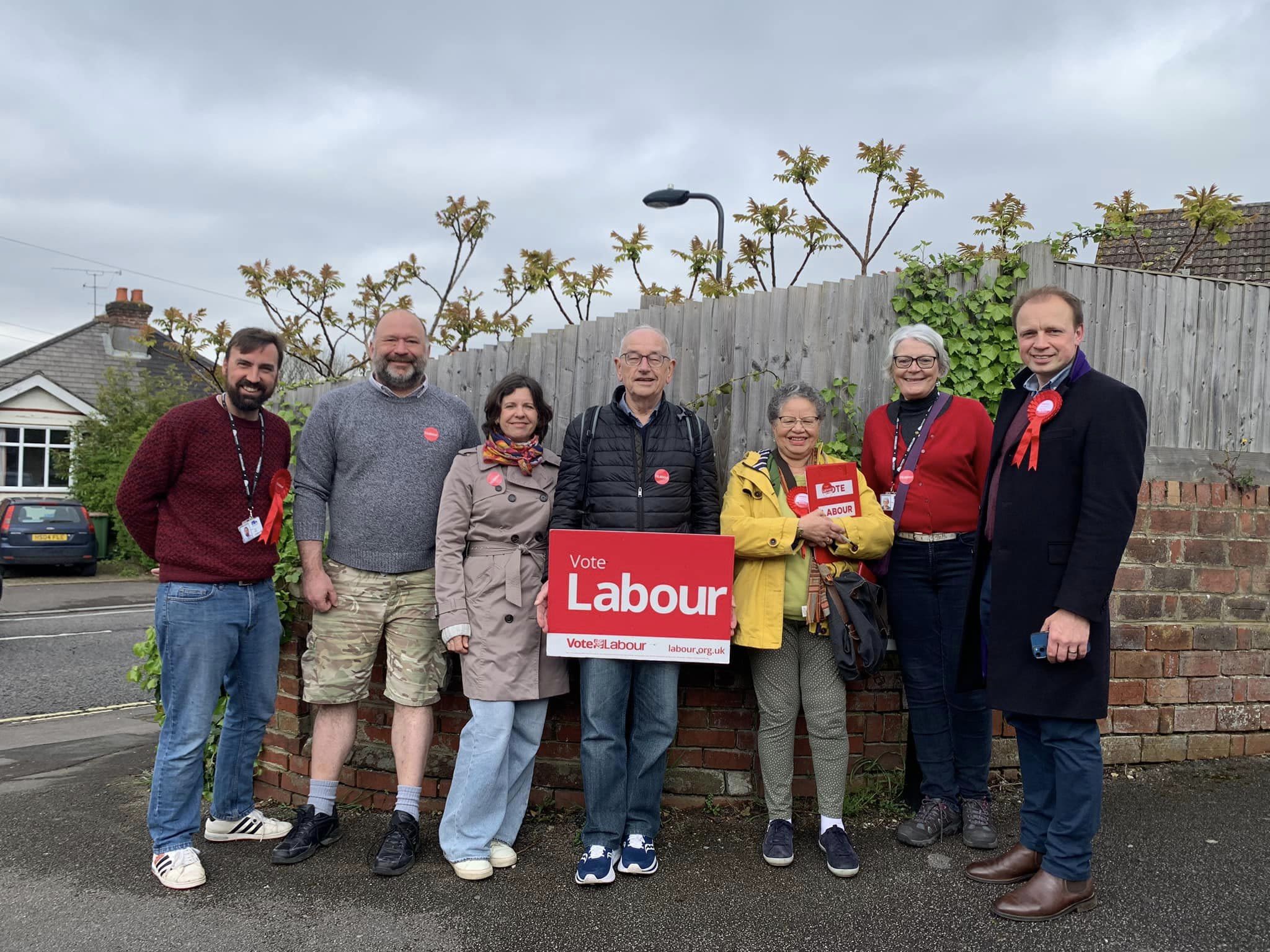
The topic of conversation on a chilly morning in late April quickly turned to grumblings about when spring would finally decide to arrive. A ‘star-studded’ group of Labour Party activists, councillors and parliamentary candidates gathered on the corner of a street in Bitterne Park, still wrapped up warm.
They came to support Gordon Cooper, a BBC producer turned Labour councillor who lost his Portswood seat by just nine votes in 2023. Five days before polling day, the team were out for one final push to convince as many known Labour voters as possible to get out and vote for Gordon on Thursday.
Amanda Barnes-Andrews is a councillor for Bitterne Park, the ward Cooper is hoping to represent, and explained their process for canvasing and gathering data. She said the Labour Party uses a system called ‘Contact Creator’ as they knock on doors to record, store, and reflect on the voting intention and demographic of residents in their ward. After knocking on a voter's door, party activists will either come back with “no data” or something new to add to their dataset.
As we walked for almost two hours, the mood was upbeat. One by one, activists would be sent to speak to a voter, and one by one, they would come back, usually declaring, “No data.” But with each door not answered or voter unwilling to speak, the spirits of the team didn’t seem to be knocked. There was a strong sense of team spirit, a group of people united around one man with one goal.

2nd May 2024
Election count

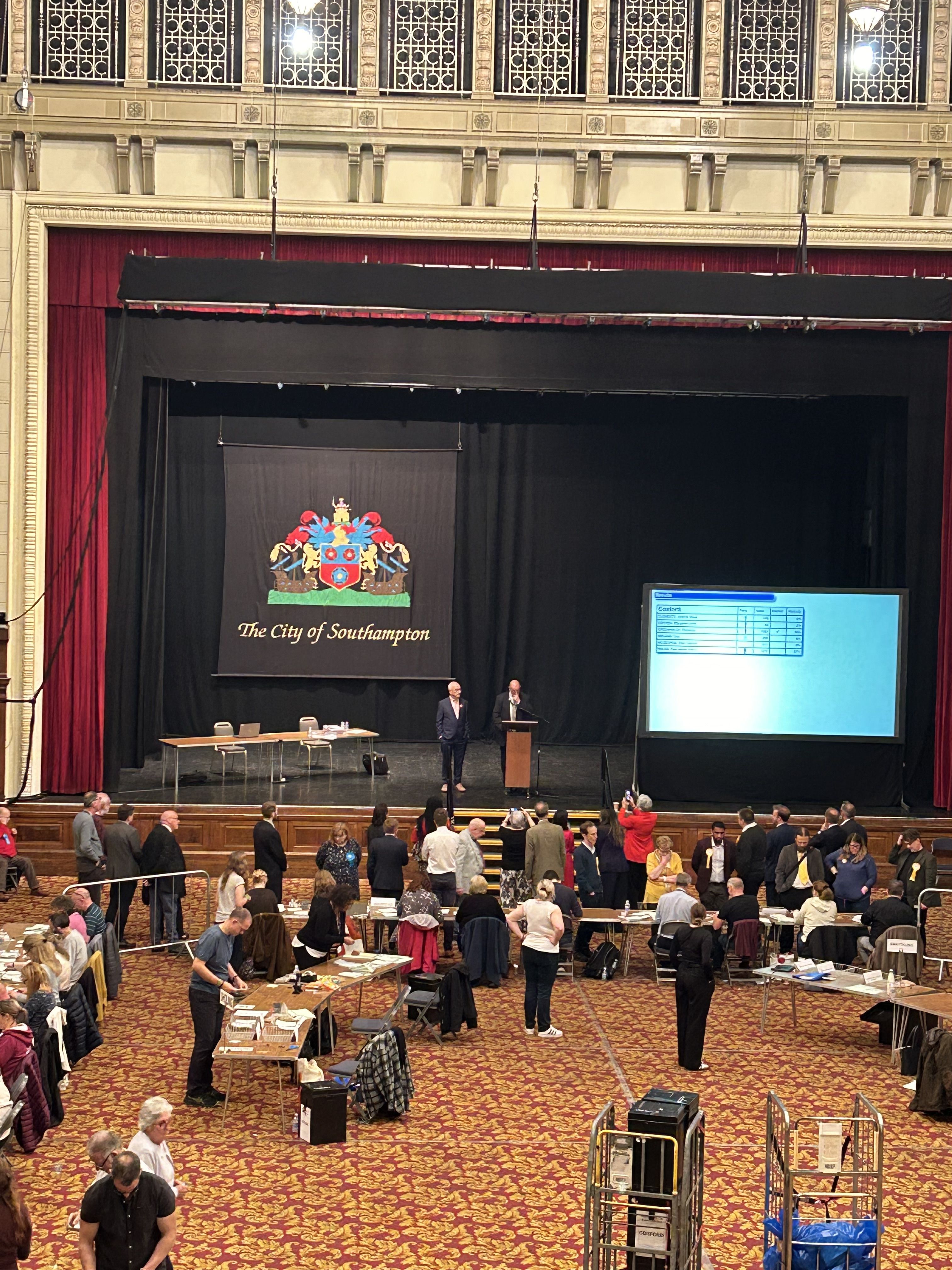
As the sun was setting, candidates and their fellow party members began gathering to await the results of an election they had spent so many weeks preparing for. The media were ushered up several flights of winding stairs to the balcony above the main hall. Below us, party officials crowded around tables clutching clipboards, desperate to see an early indication of the results.
Gordon explained the clipboards contain checklists, “a sort of grid with a series of squares for each party.”
“We can very quickly see whether it’s a Labour vote or not because you can see the ballot papers.”
Beyond predicting the poll's result, party officials are also trying to detect the mood in each smaller community within a ward. “That’s the way we get the most useful data as to where our support is,” said Gordon. Ultimately, that is what a wider goal of local elections looks like for political parties: a data-gathering exercise.
As each local polling station's ballot box is tipped onto the table and polling cards inside are sorted carefully into piles, party officials frantically note down what they are seeing, and their clipboards begin to build up a picture of hyper-local public opinion.
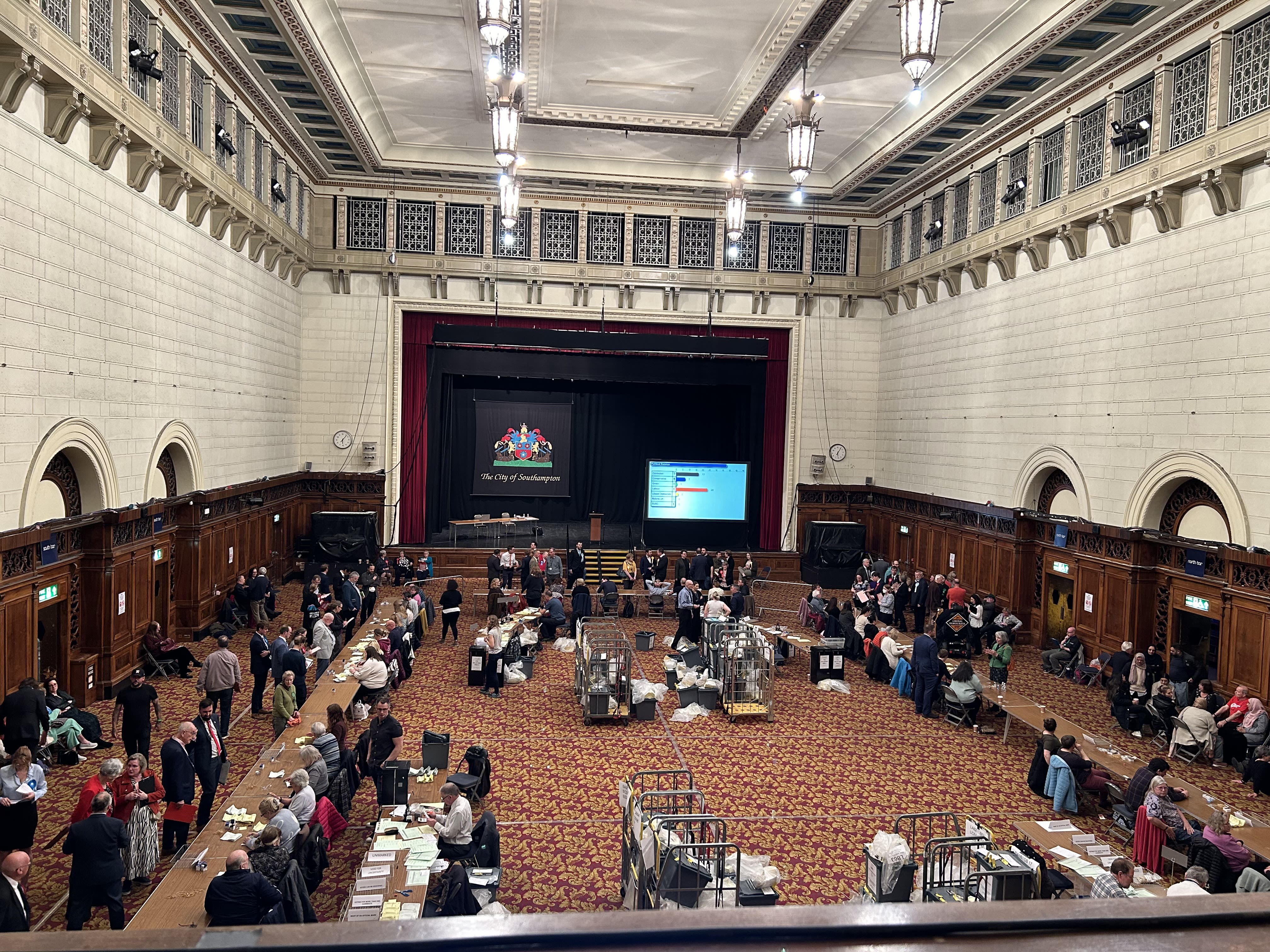
Sitting next to the media on the balcony all night was the small, hardworking Southampton City Council’s communication team. Occasionally breaking to have coffee and a chat with journalists, they spent the night running a smooth communications operation and bridging the gap between journalists and the council.
Rachel Griffin is the council's communications manager. She recounted a long polling day for her team that ended only at 7 a.m. the next day.
However, their work starts at the beginning of the year with a meeting with the Returning Officer and the Democratic Services Team. The Returning Officer runs local elections, not the Council, so Rachels's team works with them during this period.
Key work between then and polling day includes writing a communications plan, setting out key dates and messages for these dates, running a campaign encouraging people to vote, and prepping the media for the big night.
Polling day consists of a ‘dogs at polling stations’ campaign and a crucial late afternoon nap. Then, it’s a waiting game for the long-anticipated results.

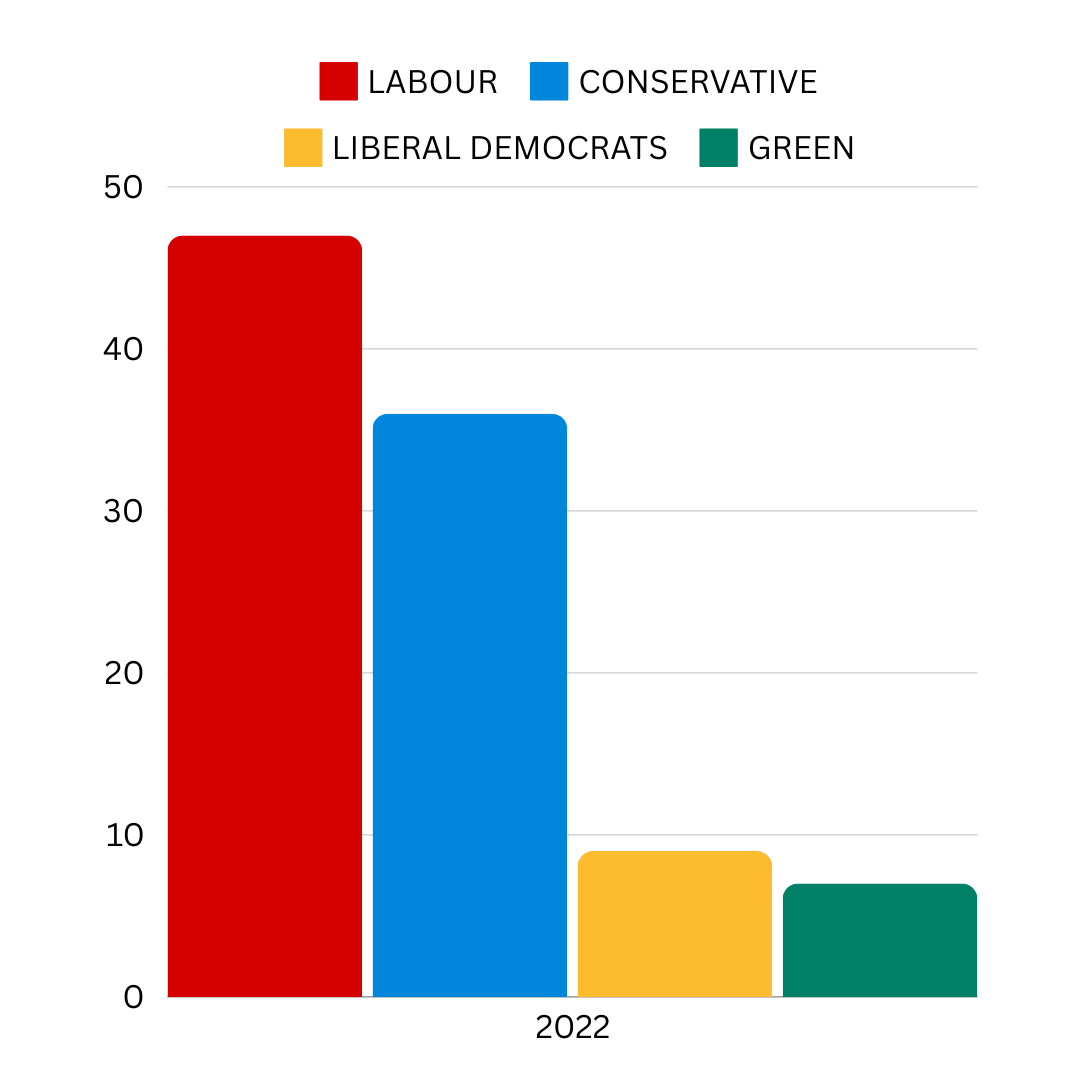
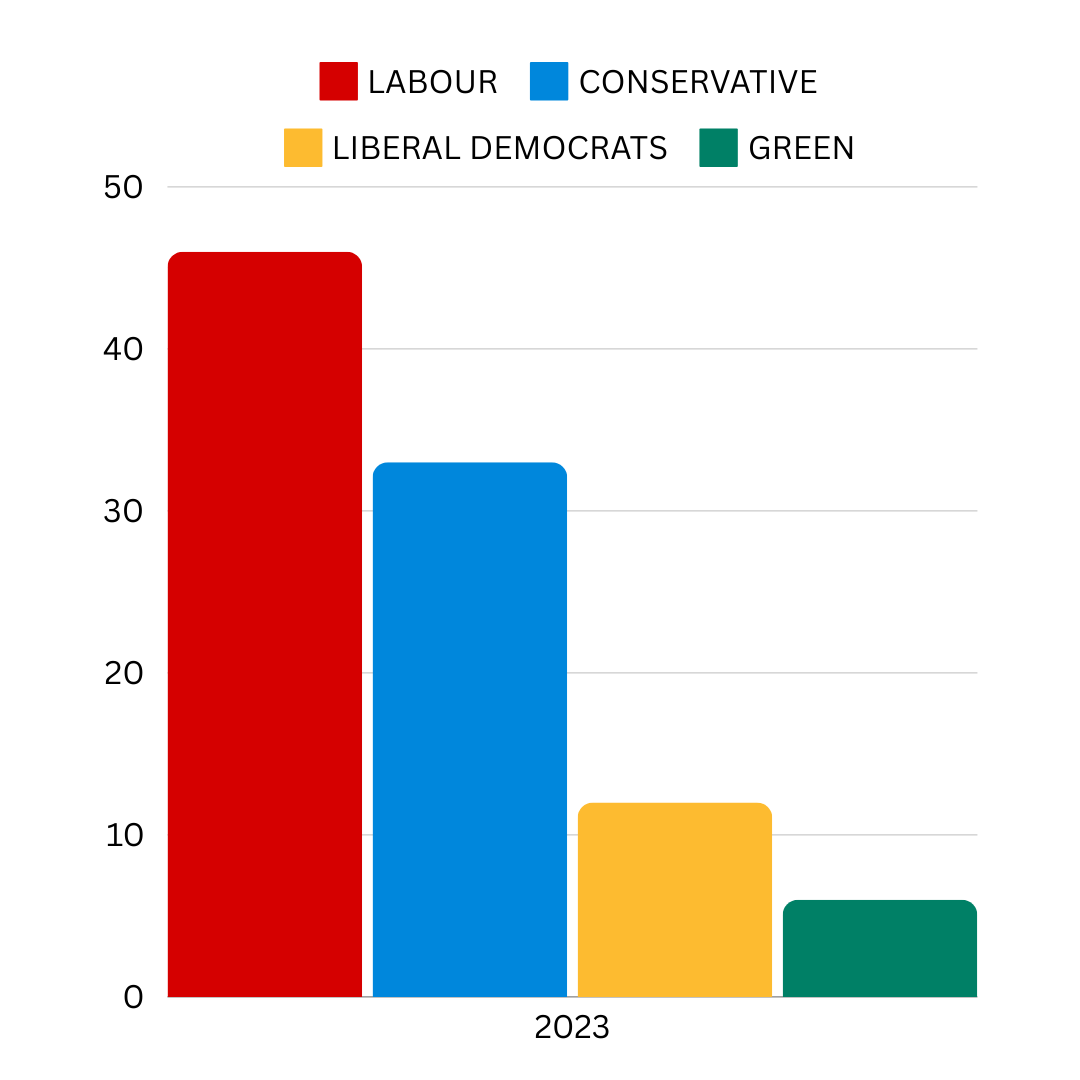
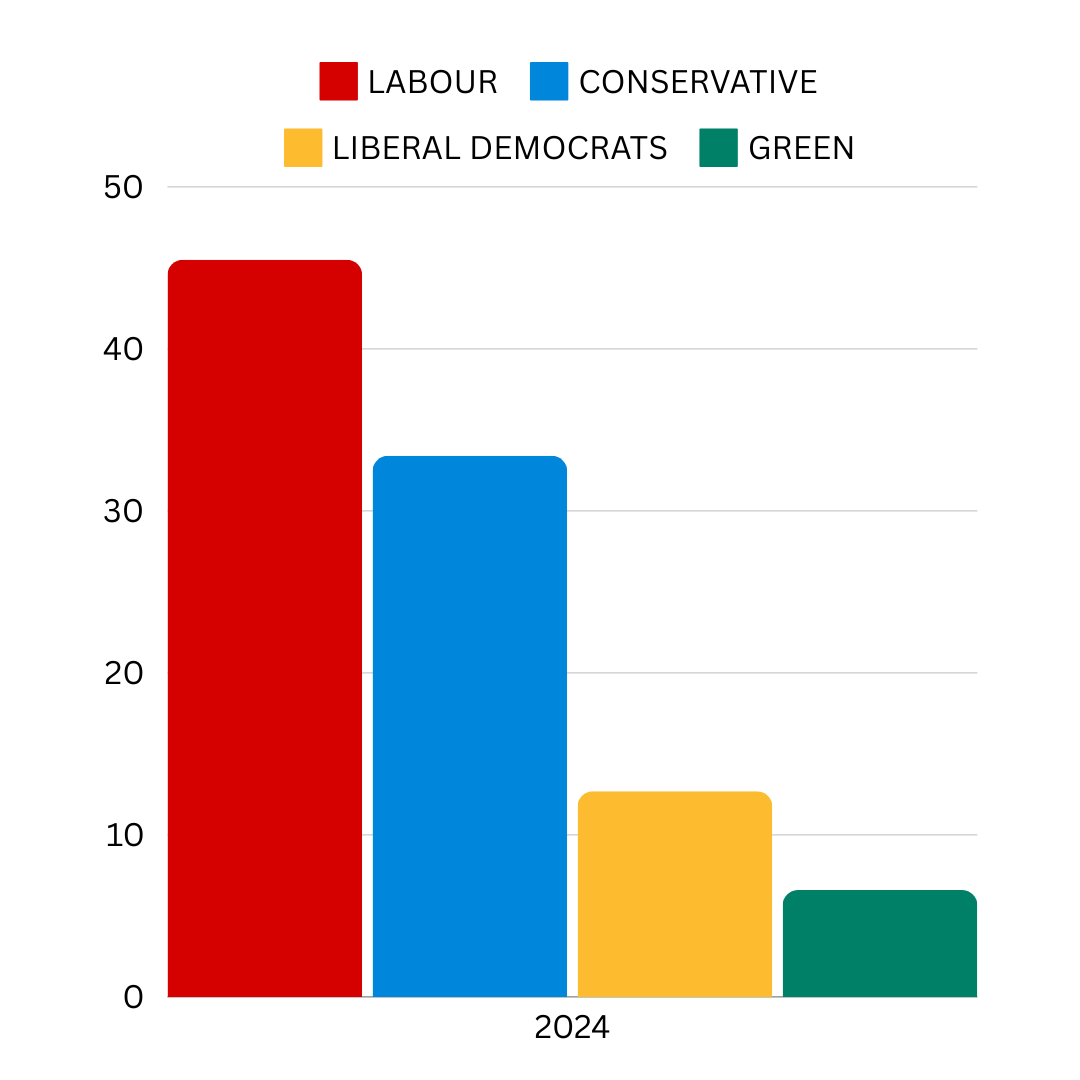
“I hate the count; I’d rather just be sent the result,” said Gordon, a man still struggling to accept how narrowly he had lost his seat just one year earlier.
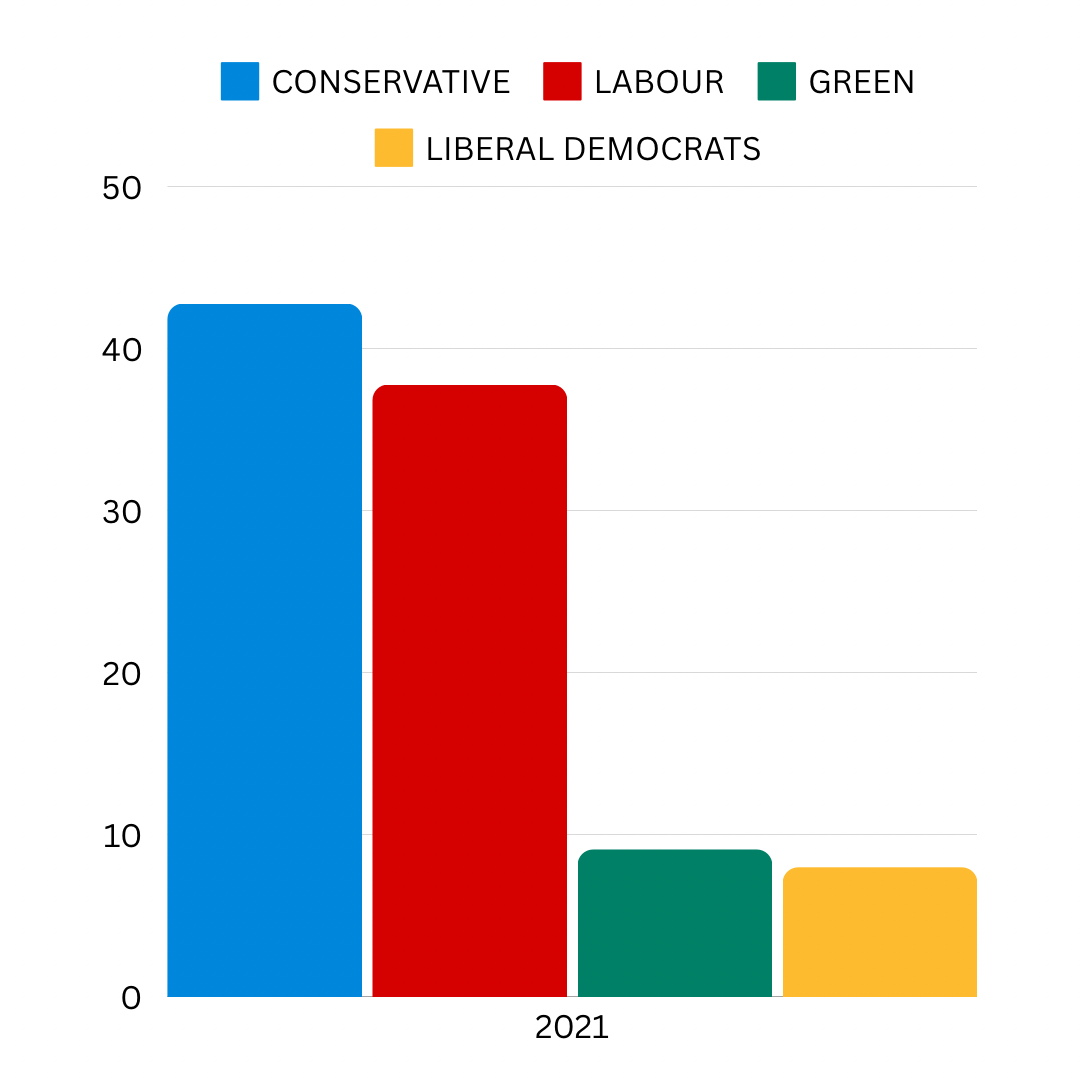
Counting finally began shortly after 4am, after five long hours of verification. In 2021, the Conservative Party briefly took control of the council, only for it to return to Labour the next year. This year, national polling indicated a Labour landslide.
The results for Bitterne Park, the ward Gordon hoped to win, were announced early on. As the returning officer walked onto the stage, Gordon followed behind, smiling and with a certain bounce in his step I had not seen before. “Gordon Cooper, the Labour Party, 1684 votes.” He’d won with an 89-vote majority. Weeks of campaigning led to one moment: “It meant so much to me”, said Gordon.
Phillip and his team at Reform UK told me, “Overall, it was a sound result for us. “We made good progress for a small party in a strongly held Labour constituency.” Their goals had been to field 17 candidates and win a vote share similar to national opinion polling—14%. In the end, they fielded 8 candidates and won 7.65% of the vote.
Labour's bigger picture was bleaker than national polling, and Gordon’s story may suggest. They lost two seats, one to the Conservatives and one to the Liberal Democrats.
For the councillors, party activists, and team within the council, there can only be a brief period of reflection before it all begins again—this time for a general election.
 Built with Shorthand