
Togetherness Through Exercise.
How run clubs are building communities, one mile at a time.
Joshua Hiscox.
Picture this, it's 7am on a Tuesday. The sky is barely bright, work is in two hours, and outside a local park or in the town centre is a group people limbering up and stretching. They could easily lie in bed for another few moments of kip, but they've swapped it for lacing up their trainers.
Despite the mixed levels of fitness or experience, they have one thing in common; to improve themselves.
However, personal bests and training plans aren't the sole reason their faces stay around. It's because of the running joke that's been going on for the past three months, the chats becoming busier than their social lives and most importantly. The support of one another in a sport that is often seen fit for someone to take on for themselves, by themselves.
This article is most definitely about running. But it's just as much about when it stops being a solo pursuit.
The Accountability Complex.
Running has a unique aspect where it has little to no start-up cost. In comparison to other recreations, at a surface level there's no memberships or equipment that will set someone's bank account into panic mode. On paper, it could be considered as the easiest sport to take up.
However, there's still a large amount of the general public that are tentative to lace-up. So why are people being cautious?
A survey by England Athletics & the Running Industry Alliance revealed the aspects for half of all non-runners which could convert them into the sport:
Instead of the cliché excuses you'd expect, time, money or fitness level. A quarter of those non-runners are lacking the company to kickstart their running journey. Revealing that the issue isn't ability, but individuality.


A Pattern Forms.
Numbers support the accountability complex. For instance, around 16 million people in the UK have ran in the past three months. Whereas an estimated 17.2 million would consider running, if the right conditions were available e.g. company to run with.
This isn't just a small, hesitant minority. It's potentially more than the current amount of runners in the UK.
As well as this, most people who run are doing it alone. In the same report it found 70% of runners aren't part of a club. With just one in five saying they're likely to join one in the future.
Sources found from the Aspire Insights - England Athletics Run Report.
If you combine these two factors , it's clear that there's a massive pool of the general public that want to start running. The overall consensus is that the lack of support in running individually has dampened the initial stage of beginning the sport.
It's a large gap between what would help and what's actually happening. If the same feeling circulates through one in four non-runners, where companionship is the piece that's missing for them, then the problem isn't about running itself.
The hurdle which usually trips people up is as mentioned; money, equipment or time dilemmas. But it's a specific answer to a usually vague problem. It's about starting something alone, with nobody noticing if you stop or take a day off.
This is where run clubs combat the issue, looking less like an option and more like the solution to a genuine, measurable obstacle. Not just because they improve fitness effectively, which can still be done individually. What can't be replicated is the intention of ''Should I go for my run today?'', being turned into a fixed schedule, where people expect you to be there and enjoy having you as a part of their community.
Small Group, Big Impact.
Not every club looks like a mass participation event. Some can start with one person, and a qualification.
Run Bath was founded in 2013, by Angela MacAusland just after she gained her UK Athletics Leadership in Running Fitness qualification. Then started the small social group runs around the city on Sunday mornings, where most of the runners were training for the Bath half marathon. There wasn't a membership system, nor a formal structure. It was just a handful of runners who enjoyed training with people who had similar goals.
By 2019, Run Bath had grown into a membership-led running group. Angela's qualification allowed her to coach on a one-to-one basis, alongside the group sessions.
Today, the club runs three sessions a week, with the option of mixed group and one-to-one sessions across weekdays and weekends. The structure is built around members training for 5ks, marathons or even triathlons.
Learn more below:

What hasn't changed is the range of people it brings together. The members can span from complete beginners who are taking their first steps into running, to marathon runners. They don't all run at the same pace, but they have the same interest of enjoying exercise and socialising.
''Meeting up three times a-week, we probably see our running buddies more than our families!''
Lance, member of Run Bath
''If you know that there's a group of people all prepared to get cold and wet in the winter, it stops you from slacking off.''
Angela MacAusland
It's a fitting summary to what Angela has built. She isn't coaching from the side lines, she's completed countless runs herself, including four marathons. 12 years after the club began its life with a handful of participants, Angela is still running alongside the people she coaches.
Run Bath is by most measures a smaller club, which is the intention and always has been. It may not have the figures of organisations like Parkrun, with hundreds or even thousands turning up. Instead, what it has is something closer to the original idea for group running: A specific place, time and people showing their faces and showing up for each other.
It's the model that has been working for over a decade, with close-knit run clubs sprouting across the country.
Parkrun, One Giant Family.
Bath Skyline Parkrun is a weekly 5 kilometre community event, held every 9am on a Saturday. For completely free of charge, runners are able to trek across the hilly terrain of the National Trust's Bath Skyline Route.
Parkrun represents far more than an opportunity to exercise. People from the area and even across the world come together for the shared purpose of creating an atmosphere where the community is just as important as the run.
Learn more below:


The Bed Factor.
The key reason that is so commonly mentioned in running clubs is that the accountability toward other runners and the expectancy to show up pushes individuals to attend every week. This leads to a routine, to get out of bed in the mornings where before, they would lie in.
Those familiar faces promote an incentive to turn up to the start line. For some, that is exactly what gets them motivated. Knowing that fellow runners and friends will be waiting for them. This sort of accountability within the running club community isn't built upon pressure or even competition. But through shared commitment and engagement.

''I cant believe that I suddenly met new friends which inspired me to carry on. If you don't turn up, you can feel very guilty."
Chris Book
Parkrun member and volunteer
Beyond accountability, Parkrun has developed into a close-knit community. Volunteers shout out encouragement to participants and runners congratulate each other after they cross the finish line. Whilst many stick around afterwards to share a coffee or tea.
These interactions can be very welcoming for newcomers and benefit friendships among those who attend regularly. The event illustrates how exercise helps unite those who otherwise might never have met. With relationships that stretch beyond the weekly run itself.
''When I'm chatting during the run, I don't even notice that I'm running sometimes. And then on other occasions you're trying to match someone else's pace, really pushing yourself.''
Chris Gillmore
Parkrun Member and volunteer
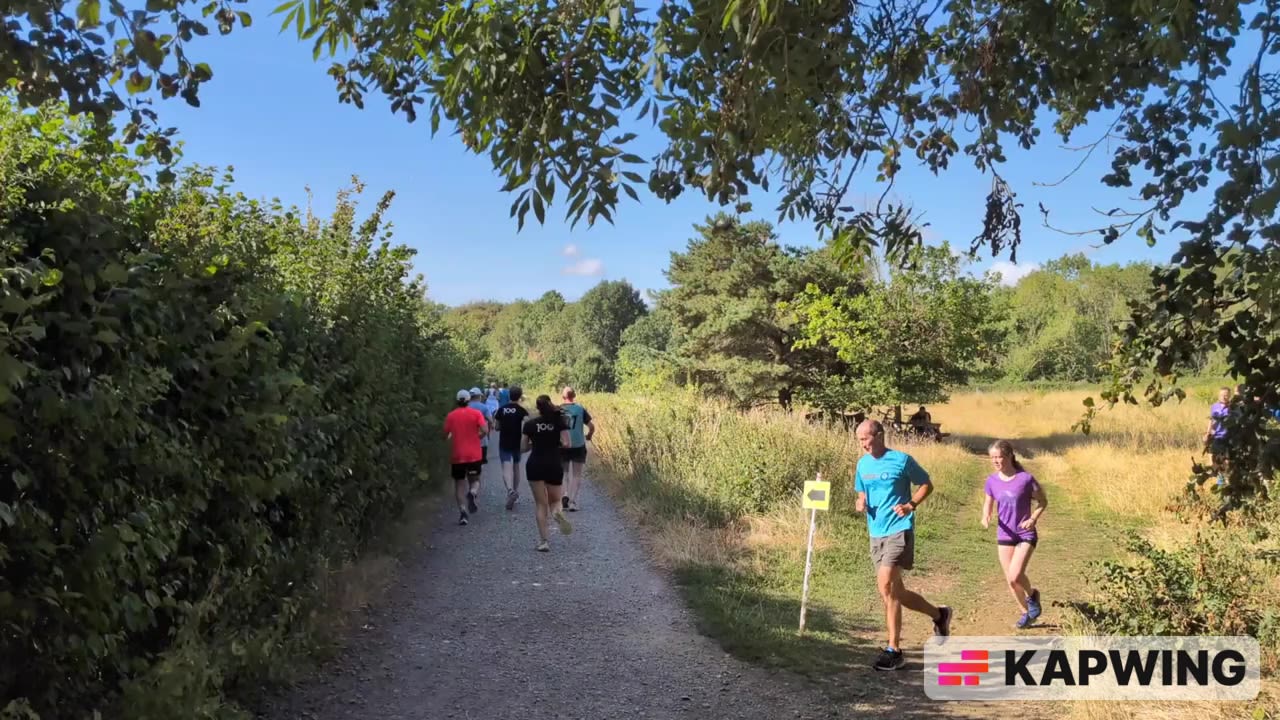
''Every time I run midweek on my own it's always slower than the Parkrun on a Saturday.''
- Scott Lovell, Parkrun member
The benefits of taking part are not limited to physical fitness. While regular exercise can improve cardiovascular health, endurance, and overall wellbeing, many participants speak just as positively about its impact on mental health.
Ending the weekend with fresh air, physical activity, and supportive company can reduce stress, improve mood, and provide a sense of achievement, regardless of finishing time.
The inclusive nature of Parkrun also means that participants can walk, run, or volunteer. Ensuring that people of different ages and abilities feel equally valued and are as much a part of the event as others.
''The core team are fantastic, the runners and volunteers are truly supportive. Everyone makes sure that you're okay physically and mentally'' - Alan Cox, Member of Parkrun
''Parkrun has pushed me out of my comfort zone. Both physically and socially. Its very easy to sit and have a coffee at home, but I feel rewarded after a run and chat.'' - Oliver Barkes
Bath Skyline Parkrun also reflects a growing recognition that exercise can play an important social role in modern life.
As feelings of loneliness and isolation continue to affect many communities, organised events such as Parkrun provide opportunities for meaningful social interaction in an informal and accessible setting.
There are no membership fees or performance requirements; instead, the emphasis remains on participation, encouragement, and enjoyment. This accessibility helps remove many of the barriers that often prevent people from engaging with organised sport.
The Volunteer Pillar.
Whilst the runners are the main focus, without volunteers Parkrun wouldn't happen.
From setting up the course, marshalling key points along the route and timing runners, to scanning the barcodes at the finish, their commitment is highly praised.
Parkrun itself describes its volunteers as the ''backbone of every event'', recognising the weekly 5k is all because of the people who give their time for others.
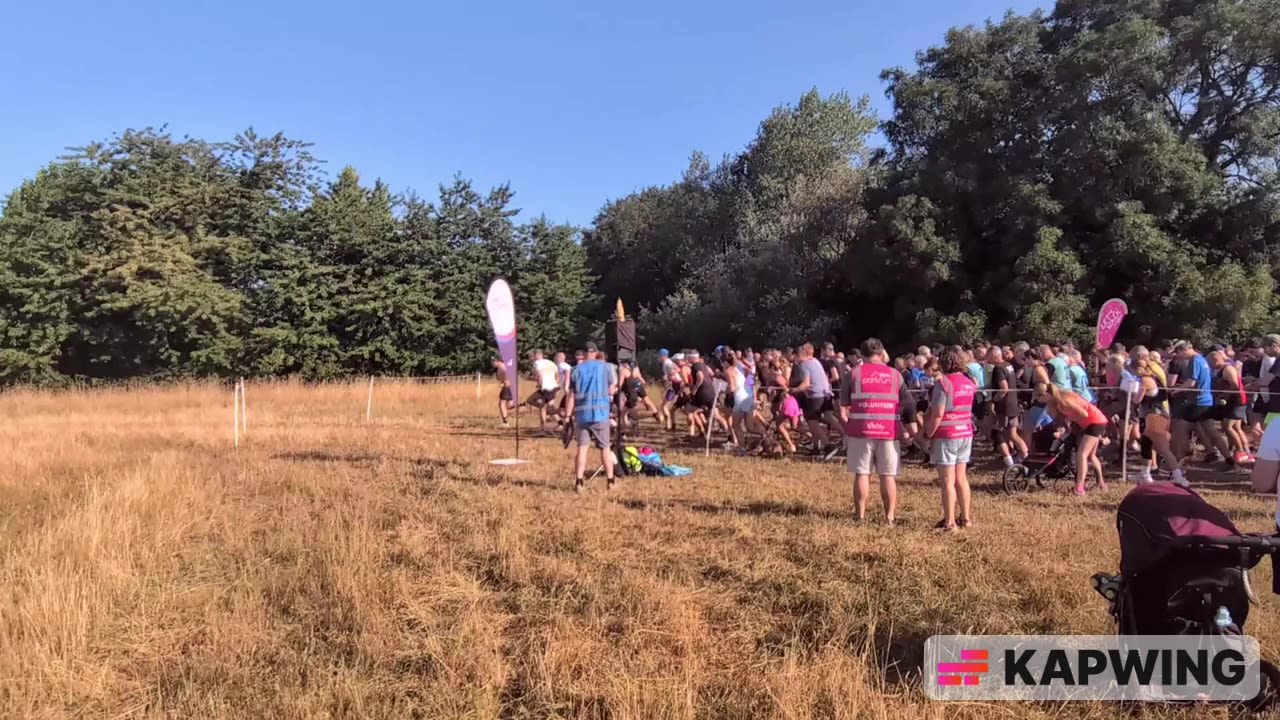
- Laura Lovell, Parkrun Member
Just like the runners, for volunteers the social aspect is just as important as helping the event. The cheers from marshal's, every word of encouragement and congratulation at the finish line creates that bond between volunteer and runners.
At Bath Skyline, that sense of togetherness is visible every week, with marshal's and participants working together to create an event that is inclusive, supportive and open to everyone. It is this shared commitment that transforms a weekly 5K into something much bigger than a run.
This is why the Parkrun community has developed so rapidly across the UK and internationally. It is truly one giant family.
One Barrier, Every Scale.
Regardless of the statistics or quotes, it's visible that the issue for a vast amount of runners is the lack of companionship.
From a handful of like-minded people in Bath to a stampede in the fields who want to better themselves and others. The solution can be found on various scales, but the underlying pattern remains.
The connection applies across the board, and it isn't a training plan. More so the simplicity of continuing to show up, those same faces every session, week after week. Because the barrier for non-runners has never really about starting, it's about doing it alone.
Whether it's for running, physical health or pure communal engagement. The model is worth paying attention to for all walks of life.
Find a club, big or small. Volunteer, to encourage others. The exercise is only a portion of the full picture. The rest is who you do it alongside.
 Built with Shorthand